
The International E-commerce Returns Stack
Last verified: June 2026
Key takeaways
- International e-commerce returns are operationally expensive. Hidden costs — customs fees, warehouse processing, product depreciation — compound fast across borders.
- A complete returns operation spans six functional layers: returns management, reverse logistics, shipping, customer support, customs automation, and package tracking. You probably don't need all six on day one.
- As of June 19, 2026, Directive (EU) 2023/2673 requires all businesses selling to EU consumers to offer a one-click digital withdrawal function — which changes how you need to structure your returns portal.
- Duties paid on imported goods can often be reclaimed when those goods are returned and re-exported — but only if you have the right processes in place.
- Most brands don't need every tool here. Returns management and shipping are essential from day one; package tracking at the Narvar or parcelLab tier only makes sense at significant order volume.
Cross-border returns are where international e-commerce gets genuinely painful. You've already navigated the currency, the shipping, the customs declaration on the way out — and now you've got to do most of it in reverse, faster, cheaper, and without losing the customer. The economics are unforgiving: duties that may not be refundable, weeks of transit time, warehouses not set up for international re-intake, and customers who want their money back yesterday.
This stack is for e-commerce operations managers and brand founders who sell internationally — whether that's a UK brand shipping to the EU and US, a Shopify store fulfilling from a 3PL, or a fashion brand dealing with the specific headache of high return rates across European markets. If you're also handling the operational complexity of omnichannel fashion, returns are almost certainly your biggest cost centre.
We've structured this around the six functional layers that map to how returns actually flow: the customer-facing portal, the physical reverse logistics, the shipping layer, the helpdesk that handles every dispute and query, the customs and duties automation, and the post-purchase tracking that keeps customers informed before they pick up the phone. Not every brand needs every layer. We'll tell you which ones matter at which stage.
Returns management
Returns management software is the interface layer — it's what your customer sees when they request a return and what your ops team uses to decide whether to refund, exchange, or reject. An exchange-first flow can convert a meaningful portion of returns into retained revenue, which changes the unit economics considerably. It's also where EU compliance lands now: from June 19, 2026, Directive (EU) 2023/2673 requires any business selling to EU consumers online to offer a digital withdrawal button — a simple, one-click mechanism for initiating returns within the statutory 14-day cooling-off period. Your returns portal needs to be compliant from that date. Revenue recovery, frankly, should be the motivating factor anyway; the compliance requirement just removes the option of putting it off.
Loop Returns
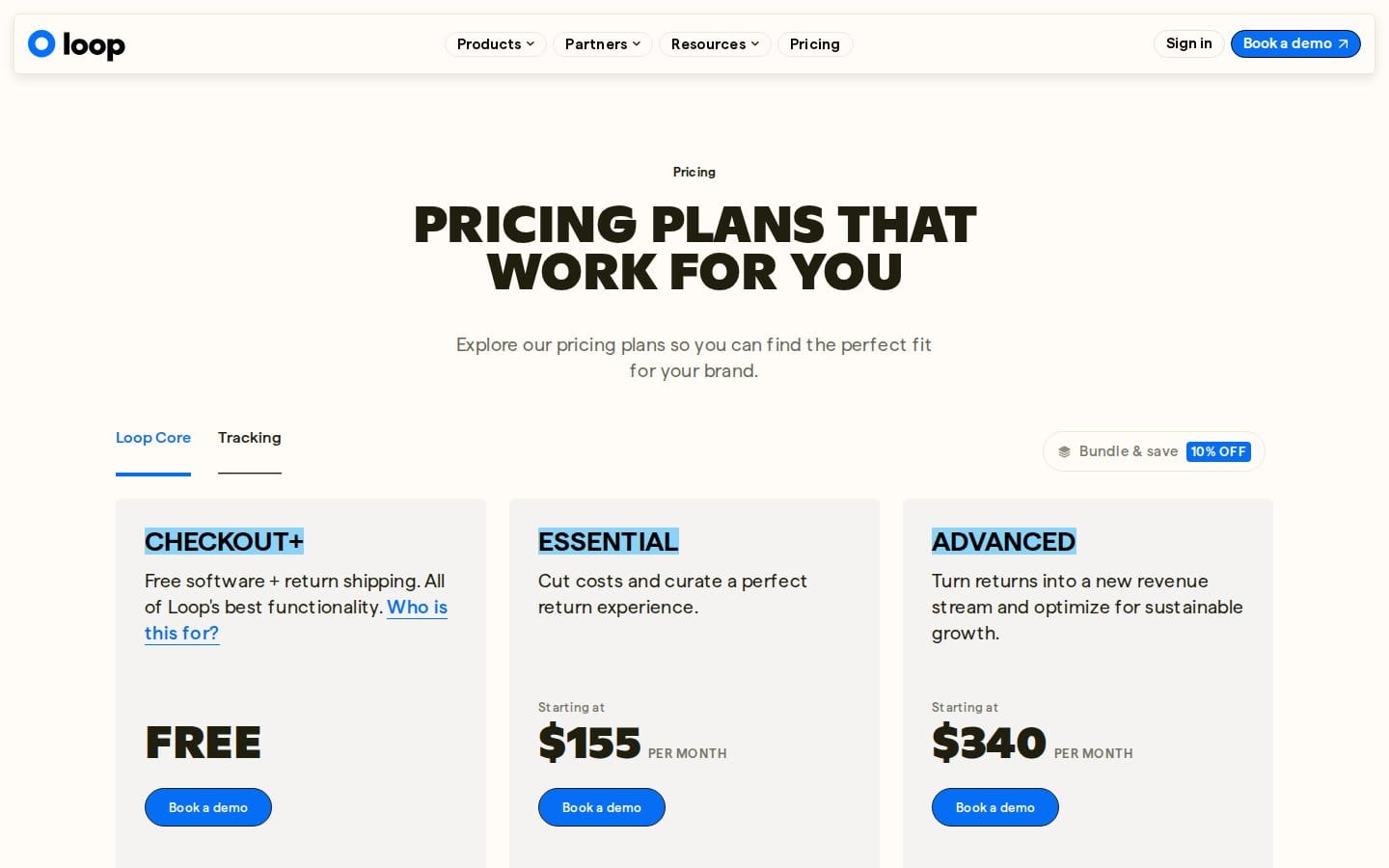
Loop Returns is an AI-powered post-purchase operations platform built primarily for Shopify brands, with a focus on turning return requests into exchange opportunities rather than straight refunds. Its Shop Now feature lets customers browse and select a replacement product during the returns flow — before the original item has even shipped back — which keeps revenue on the table that would otherwise walk out the door.
Strengths
- Exchange-first return flow with Shop Now and Instant Exchanges — customers can select a new item mid-return without waiting for the original to be received.
- Automated return policies and workflows that remove manual decision-making from high-volume ops teams.
- Built-in fraud detection — and return fraud is a real and growing cost for cross-border sellers, more than most brands want to admit.
Best fit
Loop suits high-volume Shopify brands that want to recover revenue through exchanges, not just manage return logistics efficiently. Order Tracking pricing is based on the plan selected and monthly shipment volume, with a flat fee covering intended shipments and an additional per-shipment fee beyond the monthly estimate.
AfterShip Returns
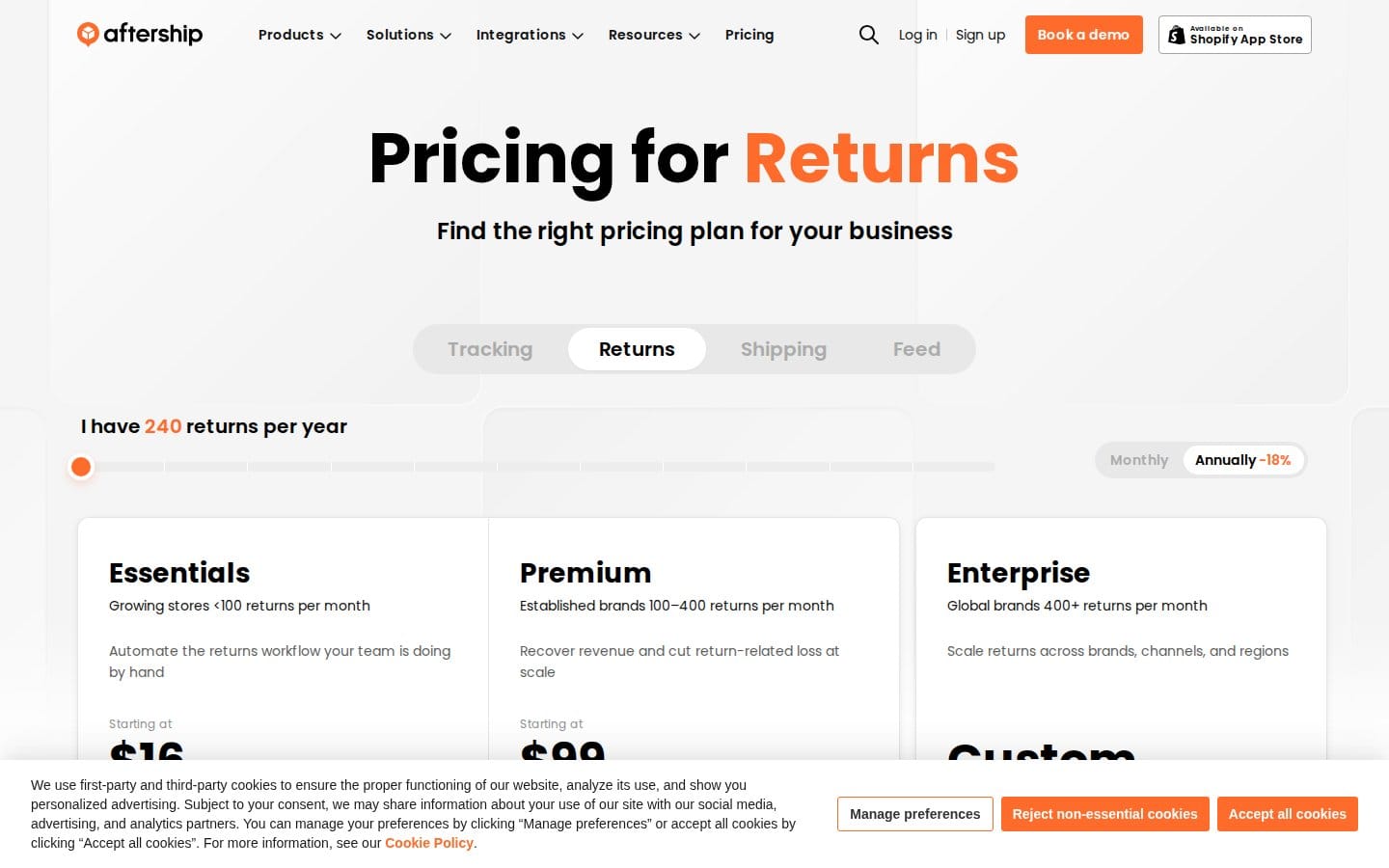
AfterShip Returns is a returns automation platform that handles the full returns and exchanges process across Shopify, BigCommerce, and WooCommerce — with a branded self-service portal, automated resolutions, and integrations with major carriers and fulfilment providers including ShipBob and Easyship.
Strengths
- Branded returns page that keeps the post-purchase experience on your domain, not a generic portal.
- Automated returns processing with incentivised exchanges and store credit options to retain revenue.
- Real-time return shipment tracking so your support team isn't fielding "where's my refund?" tickets blind.
Best fit
AfterShip Returns works well for multi-platform brands on BigCommerce or WooCommerce that Loop's Shopify-centric approach doesn't serve as neatly. Worth noting: all pricing tiers cap annual returns volume, with extra returns incurring an additional fee — model that against your actual return rates before committing to a plan.
Reverse logistics
Reverse logistics is the physical side of returns — getting items back from customers around the world, routing them to the right facility, and deciding what happens to them when they arrive. For international returns specifically, this is where the hidden costs pile up: transit time, re-import duties, warehouse intake fees, and the depreciation that happens while a product sits in customs. A good reverse logistics layer minimises all of that, ideally by consolidating return shipments and giving you visibility before goods arrive. For more on why this matters operationally, our piece on the circular economy tech stack covers how returns processing connects to broader sustainability goals.
ZigZag Global
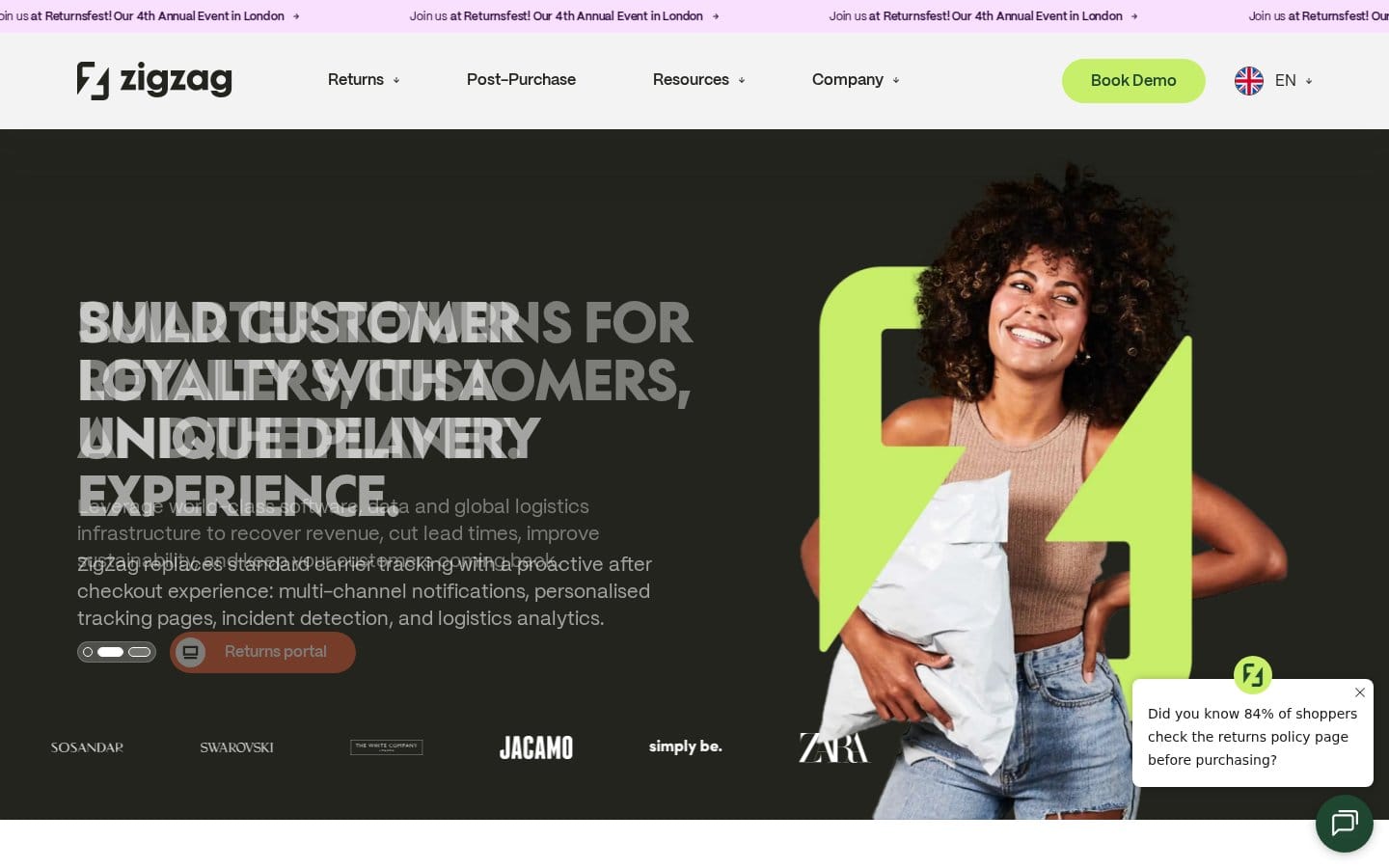
ZigZag Global is a reverse logistics platform built specifically to handle cross-border returns at scale. It connects with a wide range of carriers and warehouses globally, and its portals can be customised per market — useful when your returns policy legitimately differs between the EU, UK, and US.
Strengths
- Global carrier partnerships and warehouse integrations that make international return routing operationally realistic, not just theoretically possible.
- Automated workflow and shipping label generation triggered at the point of return request — no manual intervention required per shipment.
- Returns analytics to identify which products and markets are driving your return rate up.
Best fit
ZigZag suits retailers with meaningful cross-border return volume who need a carrier-agnostic routing layer. That said, no publicly available pricing covers the mid-volume range, so mid-size merchants will need to engage the sales team directly to get a number.
Happy Returns
Happy Returns takes a different approach: a physical network of drop-off locations (Return Bars) where customers can return items box-free and printer-free, with instant refunds triggered at drop-off and shipments consolidated before they reach the warehouse. For brands with a significant US customer base, the consolidation model can meaningfully reduce inbound shipping costs versus per-parcel returns.
Strengths
- Box-free, printer-free returns through a nationwide Return Bar network — removes friction at the customer end, which reduces WISMO contacts and improves satisfaction.
- Instant refunds at drop-off rather than on warehouse receipt, which is a genuine competitive differentiator in the US market.
- Shipment consolidation reduces per-unit return shipping cost at volume, which changes the economics considerably for high-SKU-count brands.
Best fit
Happy Returns makes most sense for larger US-focused brands processing high return volumes who can absorb the entry-level cost floor. The Return Bar network handles standard consumer goods — oversized items, high-value products, and restricted categories are typically excluded from drop-off processing.
Shipping and fulfilment
Your shipping and fulfilment layer handles both the outbound journey and the return leg. For international returns specifically, you need either a 3PL with international intake capability or a multi-carrier rate comparison tool that can find economical return label options across dozens of countries. The two tools here serve different use cases — ShipBob as a managed fulfilment network, Easyship as a rate-shopping and shipping automation platform. If you're building out your cross-border fulfilment strategy more broadly, our cross-border stack for US e-commerce is worth reading alongside this one.
ShipBob
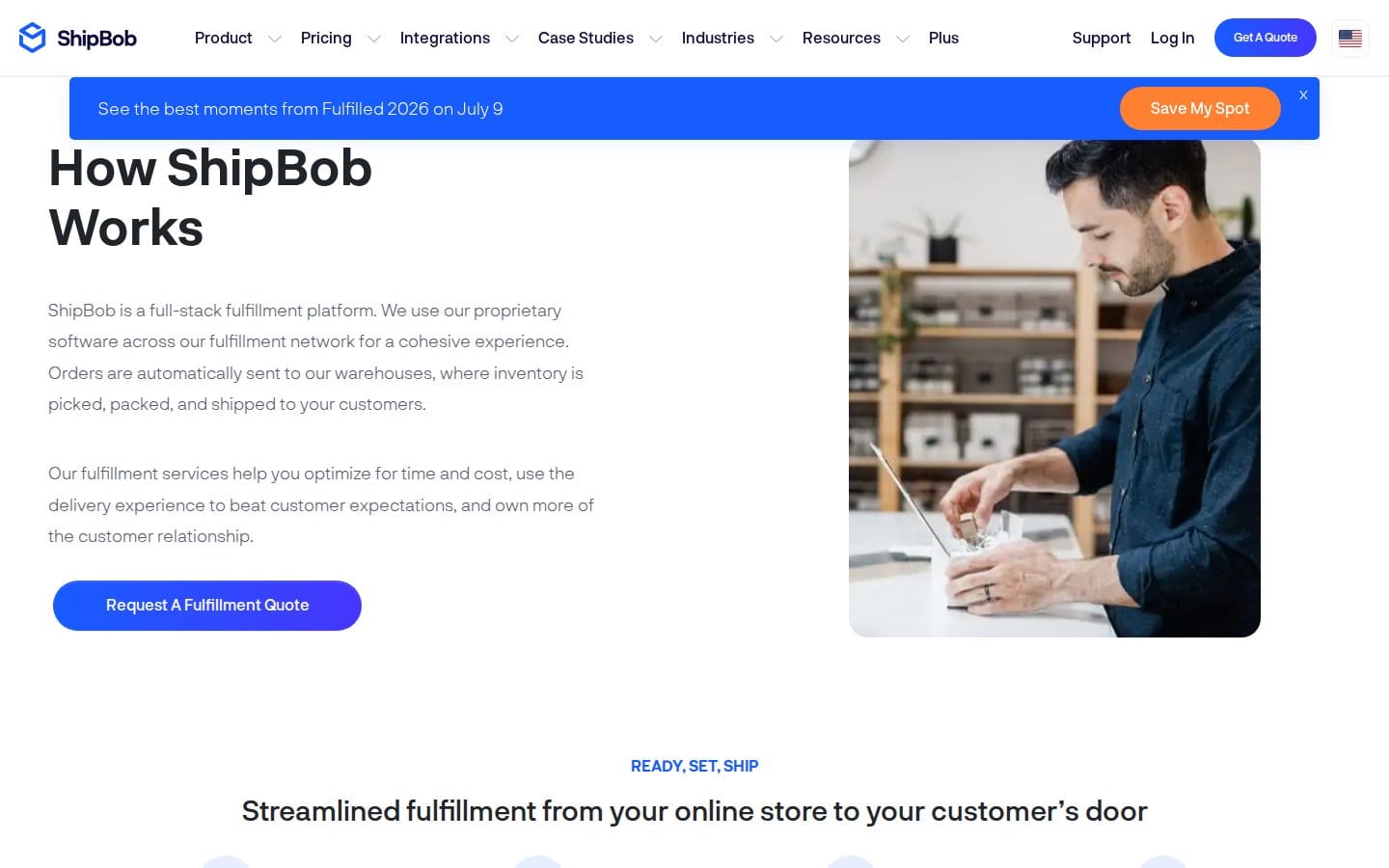
ShipBob is a global fulfilment network with more than 60 fulfilment centres, offering outsourced pick, pack, and ship alongside inventory management, returns processing, and integrations with most major e-commerce platforms and sales channels — including Loop Returns and Gorgias, which means it plugs straight into the rest of this stack.
Strengths
- Global fulfilment network with 60+ fulfilment centres — distributed inventory reduces both outbound shipping cost and return transit distance.
- Real-time inventory management and tracking across all fulfilment locations, keeping your stock picture accurate as returns are processed.
- Native integrations with Loop Returns and Gorgias, which removes the need for custom middleware when returns and support tickets interact.
Best fit
ShipBob suits brands that want to outsource fulfilment entirely and have their 3PL handle return intake as part of the same relationship. ShipBob charges separate processing fees for returns — factor those into your landed cost modelling before committing.
Easyship
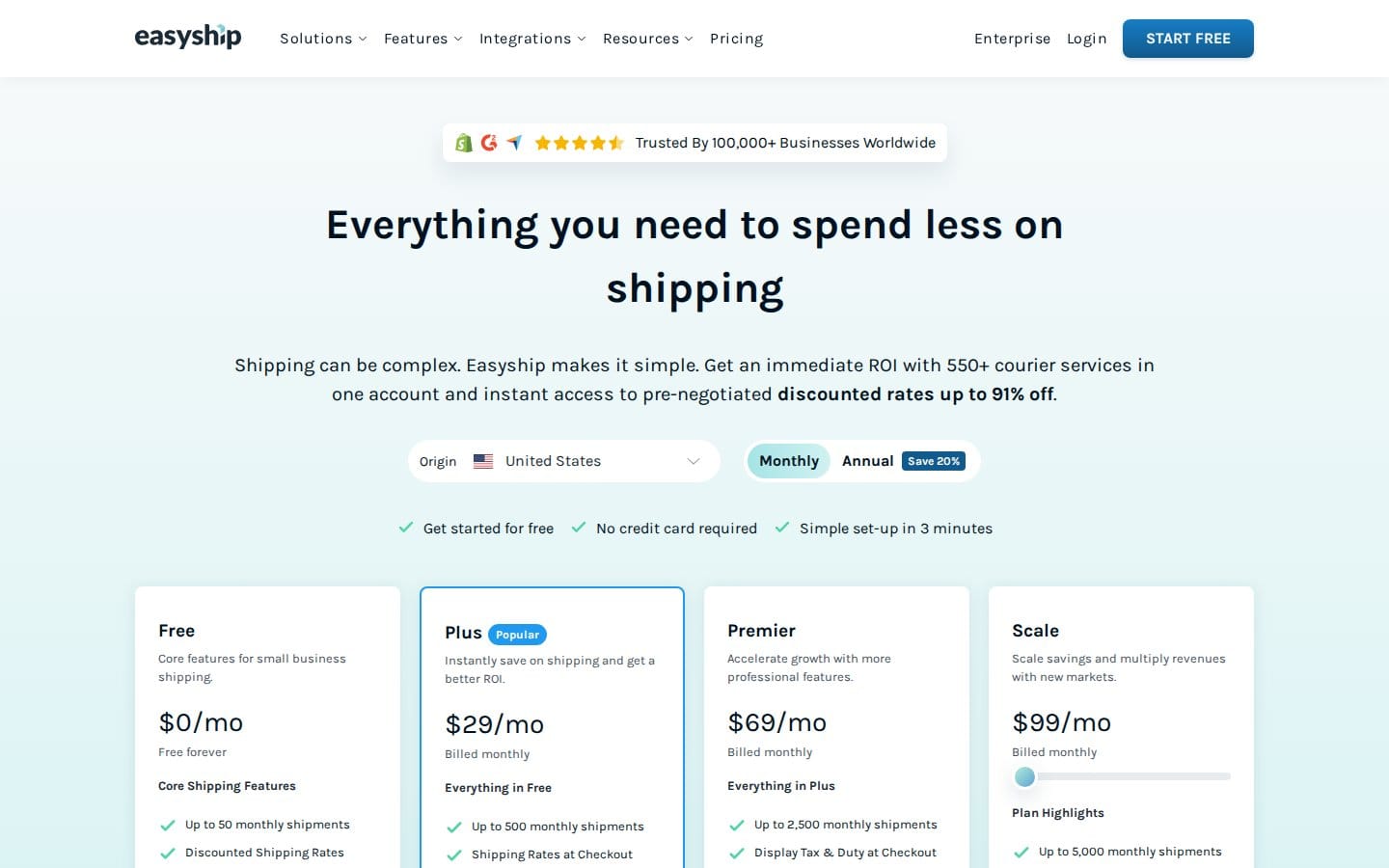
Easyship is a multi-carrier shipping platform that connects to more than 550 courier services, compares rates in real time, and automates label generation and fulfilment workflows — including import duty and tax estimates at checkout, which is directly relevant to managing international return expectations before a customer even buys.
Strengths
- Rate comparison across 550+ courier services with discounted rates, giving you economical return label options across a wide range of origin countries.
- Real-time duty and tax estimates at checkout — setting accurate expectations upfront reduces disputes and return rates downstream.
- Automation rules for one-click label printing, which reduces the manual overhead when processing international return requests at volume.
Best fit
Easyship is the right choice for brands that want carrier flexibility and rate transparency without committing to a single fulfilment provider. The free tier doesn't include Advanced API calls and operates on pay-as-you-go billing for those features, so integration-heavy setups will likely need a paid plan.
Customer support and helpdesk
Every return generates at least one support touch. Usually more. A customer who can't find the returns portal, whose refund is running late, or who received the wrong item will email, chat, or DM you — often across multiple languages if you're selling into several EU markets. Your helpdesk needs to pull in order data automatically so agents aren't asking customers to repeat themselves, and it needs enough automation to absorb repetitive queries without headcount growing in lockstep with volume. We've watched teams double their support staff to handle a returns spike that better automation would have absorbed entirely. For teams already using Gorgias with Amazon, our step-by-step Gorgias-Amazon guide covers the connection in detail.
Gorgias
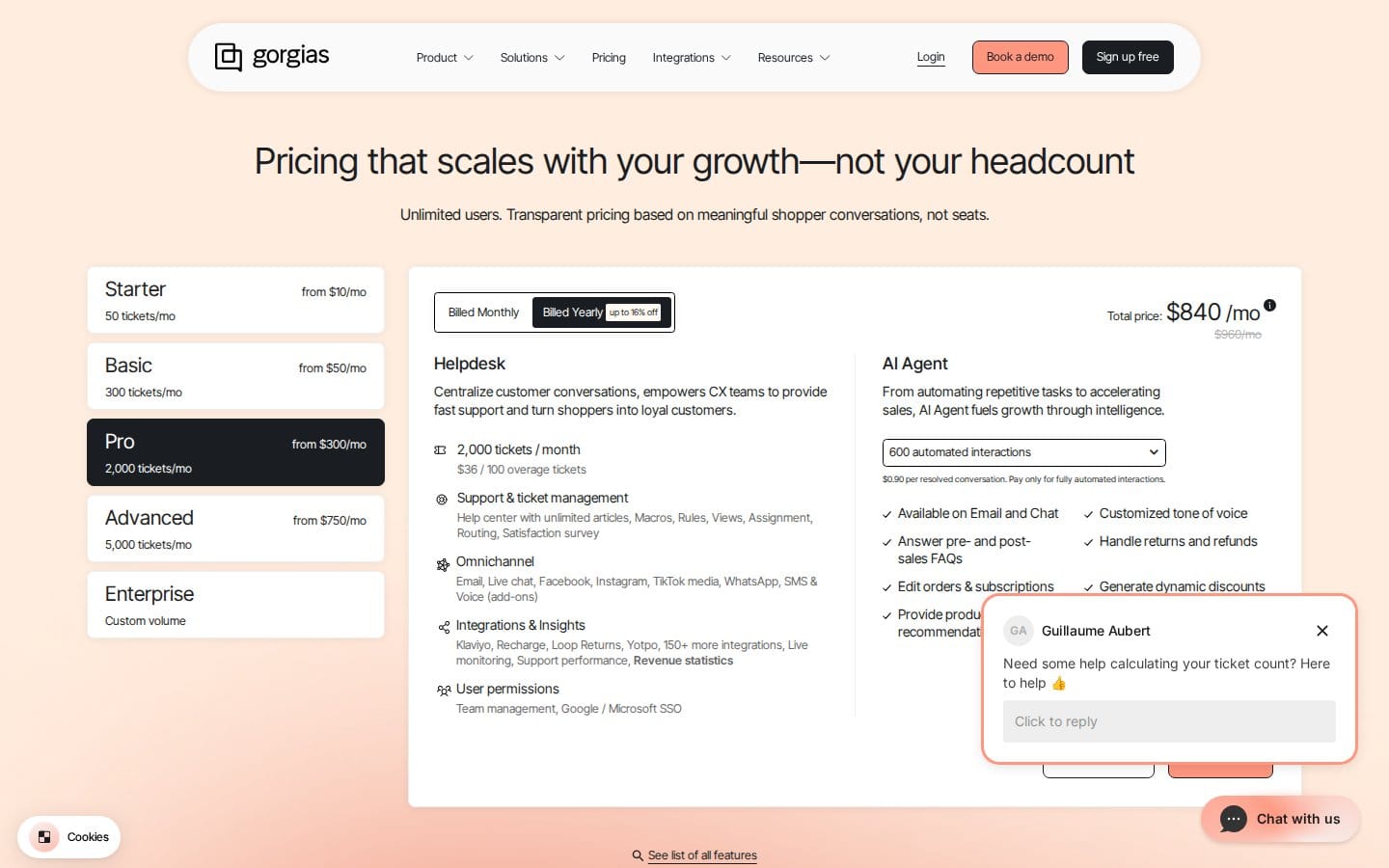
Gorgias is a helpdesk built specifically for e-commerce, with deep native Shopify integration that lets support agents cancel orders, issue refunds, apply discounts, and edit orders directly from within a ticket conversation — without switching tools.
Strengths
- Native Shopify integration for in-conversation actions including refunds and order editing — agents resolve return tickets faster without leaving the helpdesk.
- Omnichannel inbox covering email, chat, SMS, WhatsApp, Instagram, and Facebook, which matters for international customers who contact you through different channels.
- AI Agent for automated ticket resolution — particularly useful for high-volume, repetitive return status queries.
Best fit
Gorgias is the natural choice for Shopify-first brands with a meaningful support volume. AI Agent capabilities are billed separately as an add-on, per resolved conversation — model that cost against your ticket volume before enabling it at scale.
Zendesk
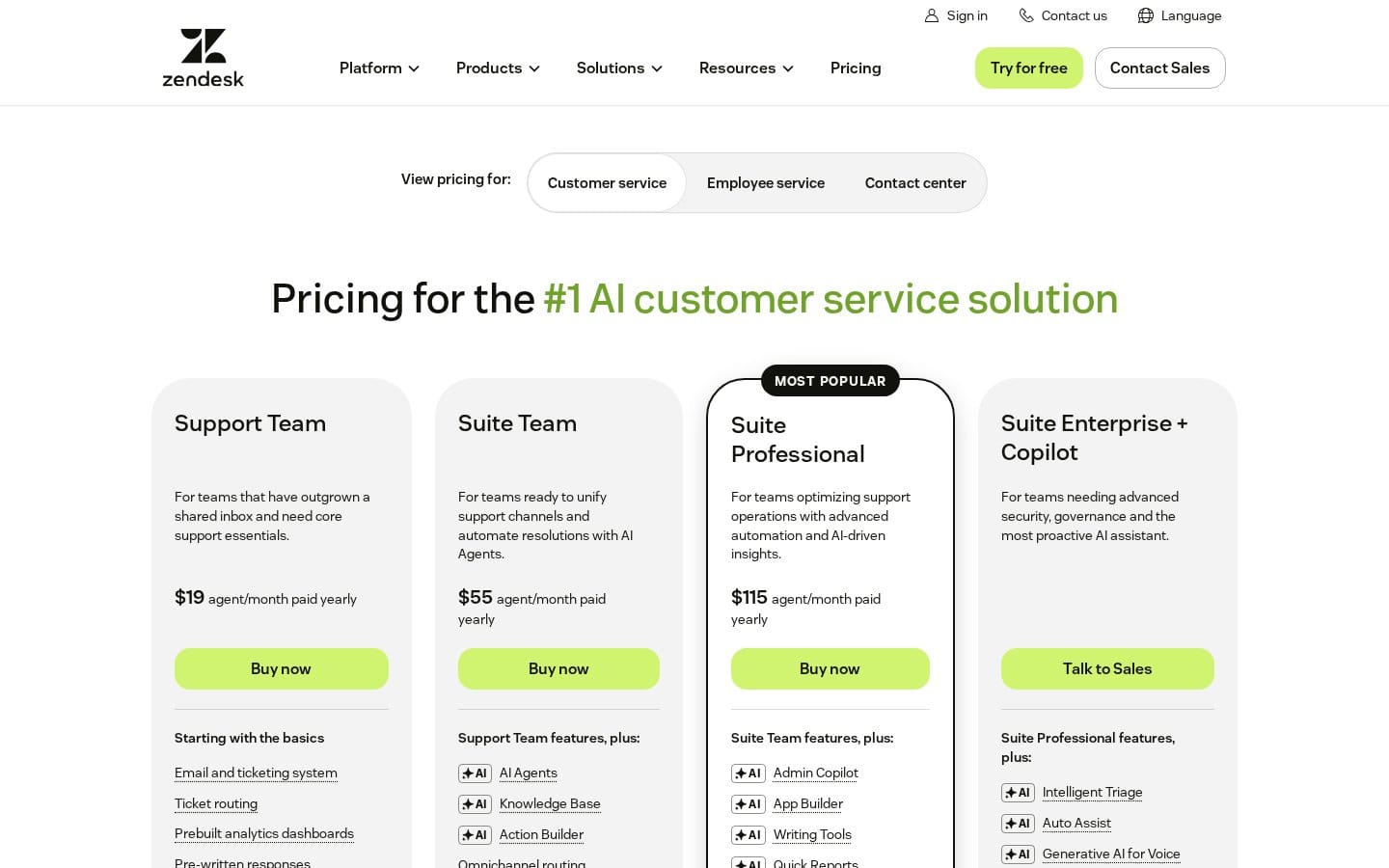
Zendesk is a widely-used omnichannel customer support platform handling email, chat, phone, social, and messaging through a single ticketing system — with self-service knowledge base capabilities, AI-powered automation, and deep reporting through its Explore analytics module.
Strengths
- Omnichannel ticketing that consolidates every customer contact channel, including voice — useful for brands with high-touch international customers who call.
- Multilingual support and self-service Help Centre, available from the Suite Growth tier — critical for brands selling across multiple EU markets with different languages.
- Advanced analytics via Zendesk Explore for understanding return-related ticket trends, resolution times, and agent performance.
Best fit
Zendesk suits larger operations or brands that have outgrown a Shopify-native helpdesk and need multilingual support, SLAs, and enterprise-grade reporting. Advanced AI features and certain add-ons are often locked behind higher tiers or carry additional costs — worth auditing before your plan selection.
Customs and duties automation
Customs is where international returns get legally and financially complicated. The same HS codes, duty calculations, and compliance obligations that apply on the outbound journey apply again on the return — sometimes with different rules depending on the destination country's re-import regulations. Get duties wrong in either direction and it costs you money. Get them right on the outbound and you set yourself up to reclaim duties when goods come back — a recoverable cost most brands leave on the table. For context on how this connects to broader cross-border compliance, our cross-border US e-commerce stack covers the regulatory picture in more depth.

Zonos
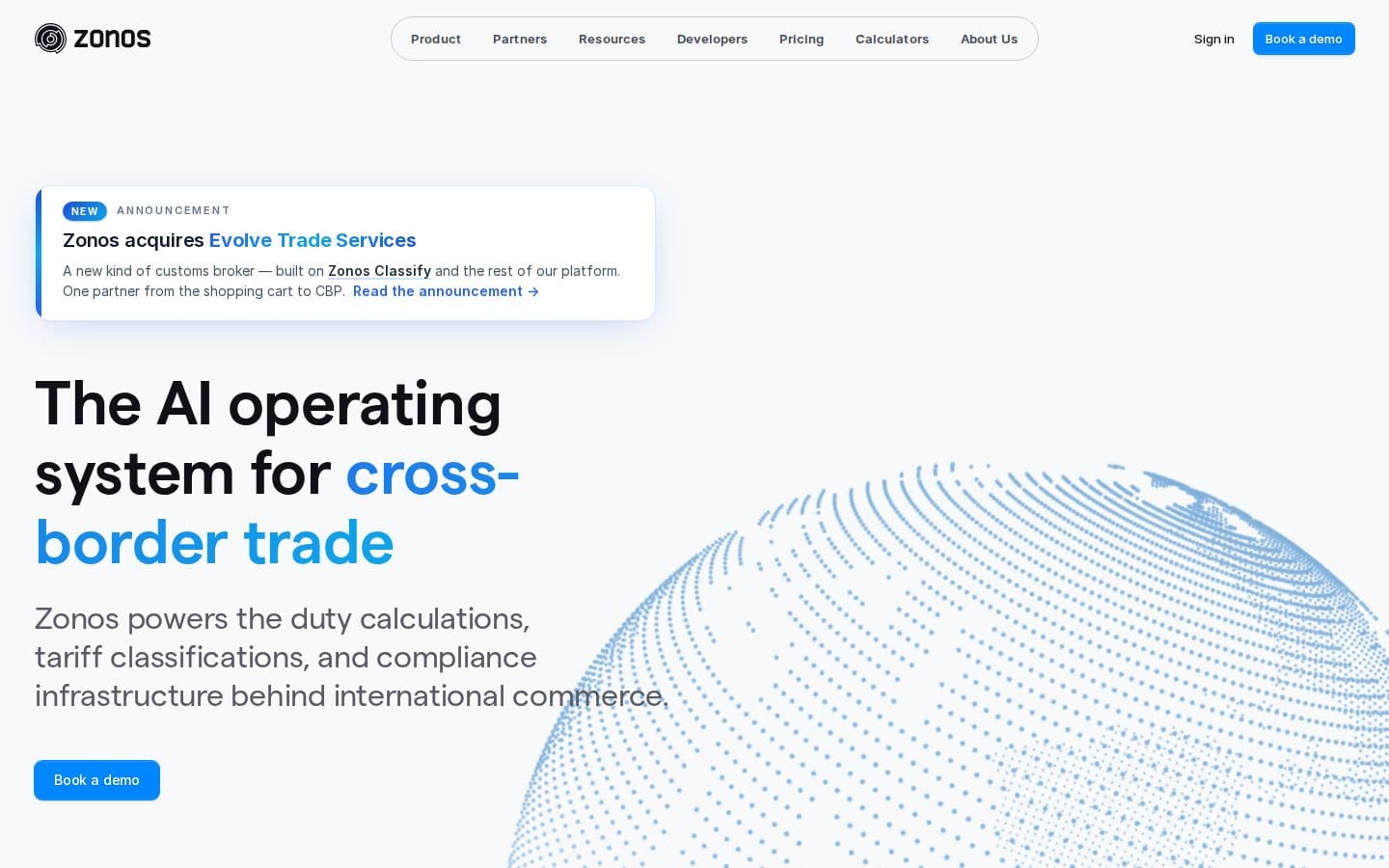
Zonos is a cross-border compliance and landed cost platform. It handles duty and tax calculation, automated HS classification, tax remittance, and localised checkout — integrating with Shopify, BigCommerce, Magento, WooCommerce, and Salesforce Commerce Cloud across multiple currencies and languages.
Strengths
- Guaranteed landed cost at checkout — customers know exactly what they'll pay including duties and taxes, which reduces return rates driven by unexpected charges on delivery.
- Automated HS classification reduces manual classification errors that create customs clearance problems on both outbound shipments and returns.
- Cross-border compliance and tax remittance across multiple jurisdictions, removing the need to manage that manually per market.
Best fit
Zonos is the right fit for brands that sell internationally at meaningful volume and need accurate landed cost shown at checkout. Zonos doesn't handle the physical shipping or package handling — it sits alongside your carrier and fulfilment layer, not instead of it.
Avalara
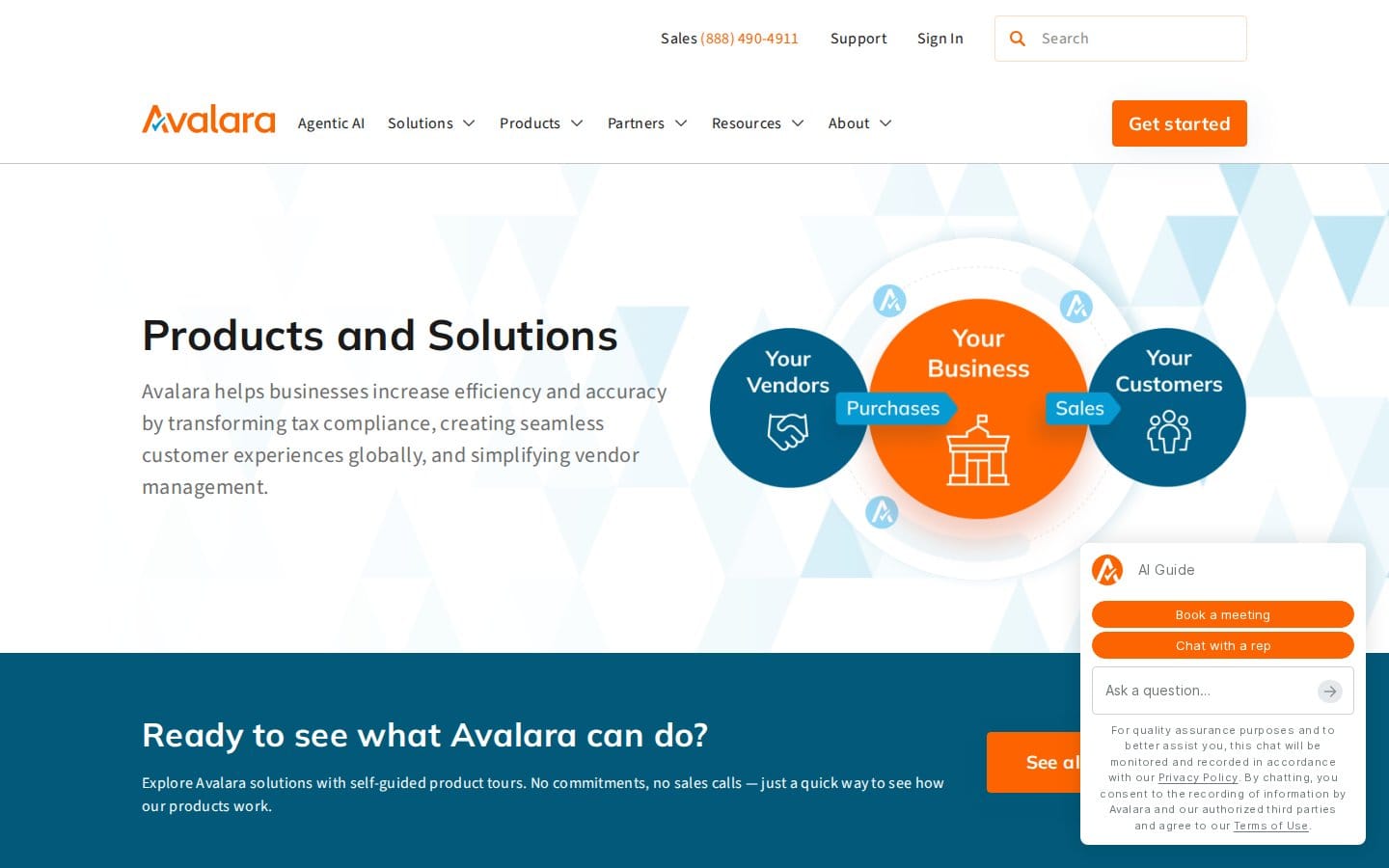
Avalara is a tax automation platform covering indirect tax compliance across a wide range of jurisdictions — sales and use tax, VAT, GST, returns filing, exemption certificate management, and e-invoicing — used by businesses of all sizes including those managing international e-commerce obligations.
Strengths
- Tax calculation across multiple jurisdictions, with coverage spanning US state-level tax, VAT, and GST.
- Returns preparation and automated filing, reducing the manual burden of multi-jurisdiction tax compliance as your international footprint grows.
- Exemption certificate management — useful for B2B cross-border transactions where exemptions need to be validated and stored.
Best fit
Avalara suits brands with significant US multi-state tax exposure or complex international VAT obligations. Functionality is spread across multiple modular products rather than a single unified package — map your compliance needs carefully before purchasing, or you'll end up buying things you don't actually need.
Package tracking
Post-purchase tracking isn't optional for international orders — it's a direct lever on support ticket volume and customer anxiety. When a return is in transit for two or three weeks across borders, the absence of tracking updates generates contacts. Proactive, branded notifications intercept that before it becomes a ticket. These tools are the most enterprise-tier options in this stack; the price points reflect that. Neither is the right choice for a brand doing a few hundred international returns a month. But at significant volume, the reduction in "where is my return?" contacts justifies the investment. If you're also thinking about the broader sustainable fulfilment tech stack, post-purchase experience tools fit naturally alongside fulfilment optimisation.
Narvar
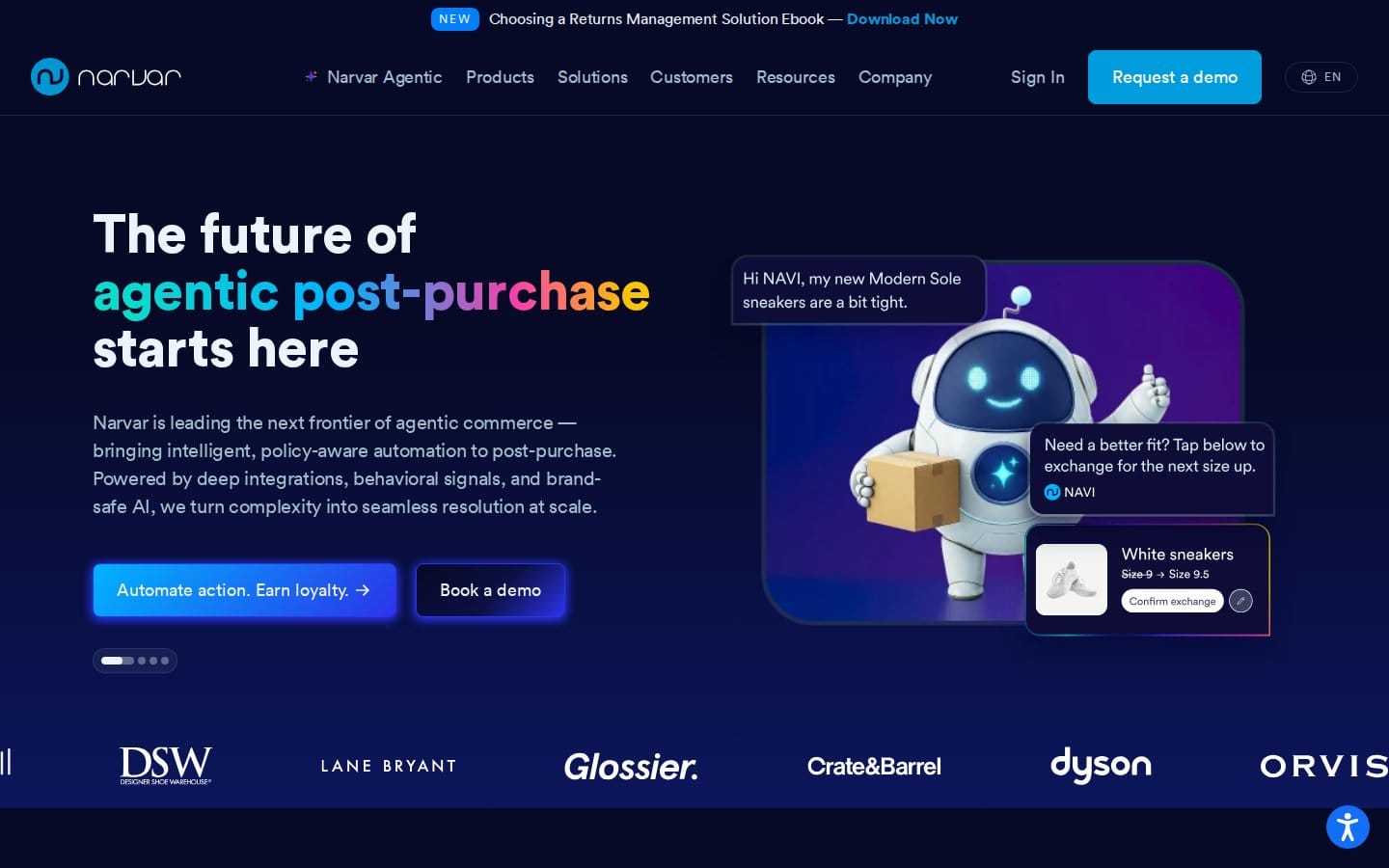
Narvar is an enterprise post-purchase experience platform used primarily by large retail and e-commerce brands with high order volumes. It covers AI-powered delivery date estimates, personalised tracking experiences, proactive notifications, returns management, and delivery claim management.
Strengths
- AI-powered delivery date promises (Narvar Promise) that provide accurate, carrier-agnostic estimates — reducing inbound contacts from customers chasing expected delivery windows.
- Personalised tracking experiences that keep customers on your branded environment rather than redirecting to carrier tracking pages.
- IRIS™ intelligent retail insights that surface operational patterns — useful for identifying which international lanes are generating the most post-purchase friction.
Best fit
Narvar is built for enterprise retailers and global brands with the order volumes to justify it. Narvar doesn't publicly disclose pricing — you'll need to engage their sales team for a quote, which should tell you everything you need to know about the budget bracket involved.
parcelLab
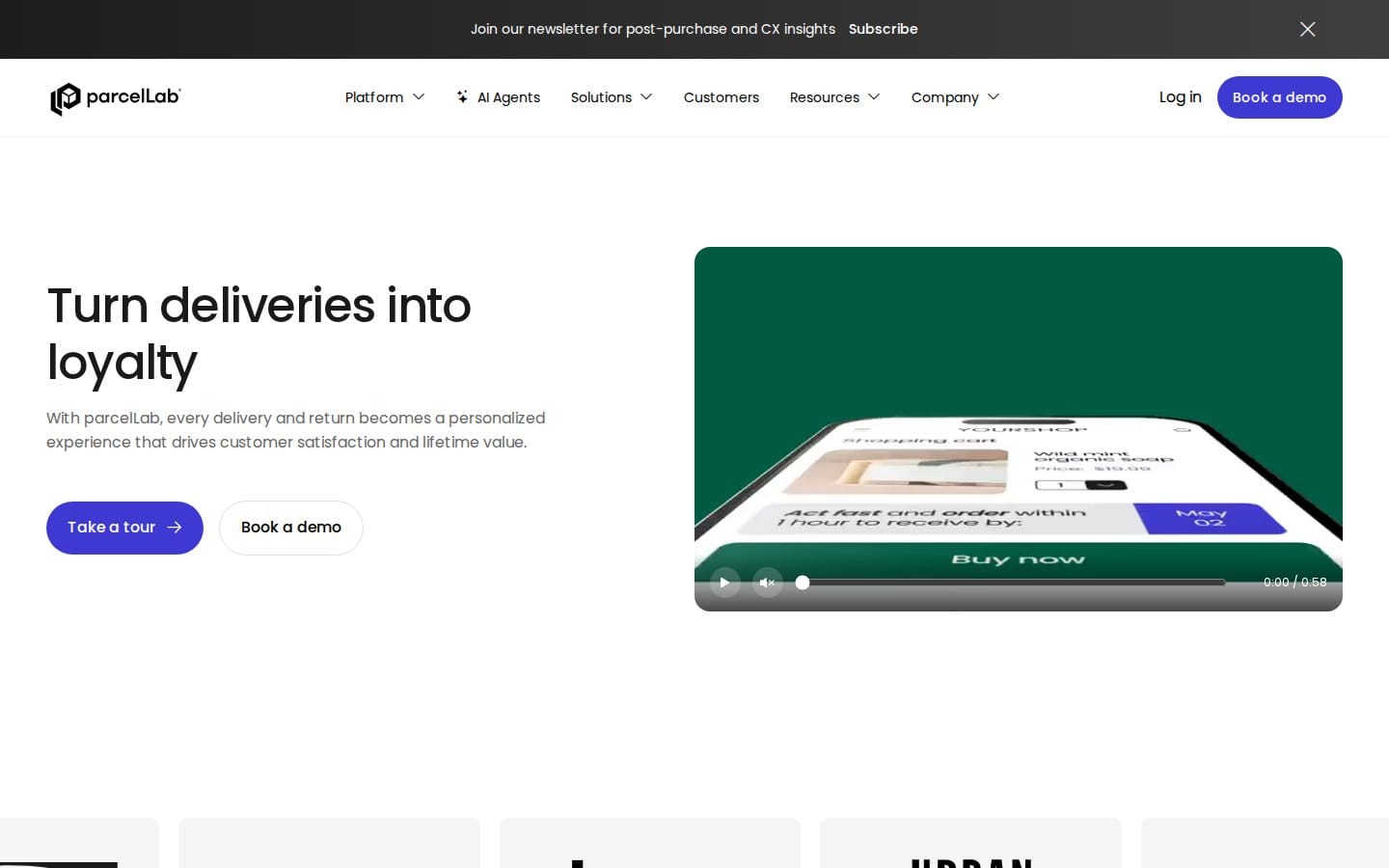
parcelLab is an enterprise post-purchase operations platform. Its feature set includes real-time branded tracking notifications across email, SMS, and in-app channels, customisable tracking pages on the retailer's own website, a self-service returns portal, and AI-powered predictive delivery date personalisation.
Strengths
- Customisable tracking pages embedded on the retailer's own domain, keeping post-purchase engagement within your brand experience rather than carrier portals.
- Multi-channel proactive notifications that reduce WISMO contacts across international lanes where carrier updates are inconsistent.
- Self-service returns portal with flexible rules, configurable to handle the policy differences that exist across EU, UK, and US markets.
Best fit
parcelLab suits enterprise retailers and brands where post-purchase experience is a strategic differentiator rather than a hygiene factor. Integration with existing management systems may require specialised technical assistance, so factor implementation time into your evaluation.
The stack at a glance
| Category | Tool | Free tier | Best integration |
|---|---|---|---|
| Returns Management | Loop Returns | Yes (Checkout+) | Shopify, Major 3PLs, Gorgias |
| Returns Management | AfterShip Returns | Yes | Shopify, BigCommerce, ShipBob |
| Reverse Logistics | ZigZag Global | Yes (14-day trial) | Shopify, Salesforce Commerce Cloud, Klaviyo |
| Reverse Logistics | Happy Returns | No | Shopify Plus, Loop Returns |
| Shipping & Fulfillment | ShipBob | Yes | Shopify, Loop Returns, Gorgias |
| Shipping & Fulfillment | Easyship | Yes | Shopify, WooCommerce, Amazon |
| Customer Support | Gorgias | No | Shopify, AfterShip, Klaviyo |
| Customer Support | Zendesk | No | Shopify, Salesforce, Slack |
| Customs & Duties | Zonos | Yes | Shopify, BigCommerce, DHL |
| Customs & Duties | Avalara | Yes | ERP, Accounting, E-commerce platforms |
| Package Tracking | Narvar | No | Shopify, Klaviyo, Gorgias |
| Package Tracking | parcelLab | No | Shopify, Salesforce Commerce Cloud, Zendesk |
Frequently asked questions
How do you handle international e-commerce returns?
Handling international returns well requires layering several processes together. Start with a self-service returns portal (Loop Returns or AfterShip Returns) that gives customers a clear, policy-driven flow in their language. Behind that, you need a reverse logistics layer to route returned goods efficiently — whether that's a carrier-connected platform like ZigZag or a physical drop-off network like Happy Returns in the US. Your shipping layer (ShipBob or Easyship) needs to support international return label generation across your key markets. And your customs layer (Zonos or Avalara) needs to handle re-import declarations accurately so goods don't sit in customs on the way back. The inventory forecasting implications of returned stock are also worth building into your replenishment model — returned goods that re-enter sellable inventory affect your stock position in ways that matter for forecasting accuracy.
Can you reclaim duties and taxes on returned international orders?
In many cases, yes. In the US, the CBP duty drawback programme can refund up to 99% of eligible duties, tariffs, and certain fees when imported goods are subsequently exported or returned. The catch is that you need accurate documentation — HS codes, entry numbers, import records — at the point of original importation. Without that paper trail, the claim is almost impossible to process. On the EU side, re-importation relief allows goods originally exported from the EU to be reimported with duty relief, provided they're in the same condition as when they left. Neither of these works automatically — both require structured record-keeping and, at volume, dedicated customs support. Accurate HS classification tools like Zonos reduce the risk of errors that would invalidate a claim.
What is the best software for managing cross-border returns?
Honestly, most brands overthink this. There's no universal answer — it comes down to your platform and your return volumes. For Shopify brands prioritising revenue retention through exchanges, Loop Returns is hard to beat. For multi-platform brands needing broader compatibility, AfterShip Returns is the more flexible choice. For the physical routing of international return shipments, ZigZag Global is purpose-built for cross-border flows in a way that generic fulfilment tools aren't. A returns management platform and a reverse logistics layer working in combination covers the majority of what most international sellers actually need — one without the other leaves obvious gaps. The agile operations stack for fast fashion covers how high-return-rate categories like apparel need to think about this more systematically than lower-return categories.
How do new EU regulations affect e-commerce returns in 2026?
Two significant regulatory changes are in effect or coming into effect in 2026 for EU-facing e-commerce. First, Directive (EU) 2023/2673 came into force on June 19, 2026, requiring all businesses selling online to EU consumers to provide a mandatory digital withdrawal function — a clear, accessible button or equivalent mechanism to initiate a return within the statutory 14-day cooling-off period. If your returns portal requires customers to email, call, or hunt for a link, you're likely non-compliant from that date. Second, Directive (EU) 2024/825 on empowering consumers for the green transition requires businesses to provide better information at point of sale on product durability and repairability — which affects how you communicate product quality and, indirectly, how customers make return decisions based on product lifespan claims. Both are compliance requirements with real consequences for non-compliance, not optional improvements you can defer to next quarter. The packaging compliance obligations for EU sellers are a related area worth reviewing at the same time.
Which parts of this stack do you actually need?
If you're doing fewer than a few hundred international returns a month, the enterprise-tier tools — Narvar, parcelLab, Happy Returns — aren't the right fit yet. The minimum viable international returns stack is simpler than most people expect. Pick a returns management platform (Loop if you're on Shopify, AfterShip if you're not), a shipping layer that matches your situation (Easyship if you need carrier flexibility, ShipBob if you're ready to hand off fulfilment entirely), and a customs tool if landed cost accuracy at checkout is causing you problems (Zonos). Three tools. That's genuinely enough to handle the bulk of the operational pain at early-to-mid stage international volumes.
Once you're past roughly 500 international returns a month, the reverse logistics layer starts paying for itself — the consolidation savings and routing efficiency justify the platform cost. Post-purchase tracking tools like Narvar or parcelLab make sense later still, when "where is my return?" tickets are a measurable drag on your support team. Add layers when the problem they solve is already costing you money, not before.
Screenshots are from each tool's public pricing or features page, captured June 2026. We are not affiliated with any third-party tool listed unless explicitly noted.