
The Omnichannel Tech Stack for Modern Fashion Brands

Last verified: June 2026
Key takeaways
- A modern omnichannel fashion tech stack spans six categories: customer support, email marketing, loyalty, returns, subscriptions, and analytics — with inventory and compliance underneath all of it.
- Real-time inventory visibility is the hardest operational problem for multi-channel fashion brands. It's where most stacks break first.
- Not every tool here is essential from day one. Customer support and email marketing pay for themselves fastest; subscriptions and advanced analytics come later.
- EU textile regulations (Digital Product Passports, Refashion, REACH) are operational requirements now for brands selling into Europe — not something you can defer.
- Several tools here have free tiers that are genuinely useful, not just trial bait. Omnisend, Hotjar, AfterShip, and Smile.io all offer real functionality before you spend a penny.
Fashion is one of the hardest categories to run as an omnichannel brand. You're managing hundreds of SKUs across sizes and colourways, return rates that dwarf most other verticals, seasonal demand swings, and customers who expect the same experience whether they're buying on Instagram, Shopify, or a physical pop-up. And that's before you factor in EU sustainability regulations that are reshaping what it means to sell clothes in Europe.
This stack is for fashion brands selling on two or more channels — typically Shopify plus Amazon, eBay, or a wholesale account — with somewhere between five and fifty people in the operations team. It's not a startup stack and it's not enterprise. It's the layer where most growing fashion brands actually live: past the "everything in Shopify" phase, not yet at a full ERP implementation.
We've organised the tools into six operational categories. Each solves a distinct problem. Some are essential from month one; others you bolt on as revenue grows. We'll be clear about which is which at the end. For brands also grappling with sustainable operations, our e-commerce circular economy tech stack covers the sustainability-specific layer that sits alongside this one.
Inventory, compliance and accounting
Every omnichannel stack needs a central nervous system — something that knows how many units you have, on which channel, and whether you've met your regulatory obligations in each market. For fashion brands selling into the EU, that last point is no longer optional. Digital Product Passports are coming under the EU Textiles Strategy, and EPR schemes like France's Refashion and the Netherlands UPV are already live. This category handles inventory sync, compliance, and the accounting reconciliation that keeps your finance team sane.
Ceendesis
Ceendesis combines multi-channel inventory management, EPR compliance (including textile-specific regulations), and marketplace-to-accounting sync in a single platform. For fashion brands running multiple storefronts, it removes the spreadsheet gymnastics that usually sit between your sales channels and your accounts.
Strengths
- Multi-channel inventory, EPR compliance, and marketplace-to-accounting sync in one platform — useful for fashion brands managing both stock and EU regulatory obligations like Refashion or REACH.
- Built for brands selling on Shopify, Amazon, eBay, Walmart, and TikTok Shop — covers the channel mix most growing fashion brands actually use.
- Native Xero and QuickBooks reconciliation for marketplace payouts, which pairs well with our guide on reconciling Shopify payouts in Xero.
Best fit
Strong fit for fashion brands managing stock across two or more marketplaces who also need to track textile EPR obligations. Overkill for single-channel Shopify-only stores.
Customer support
Fashion generates a disproportionate volume of support tickets — size queries before purchase, order tracking questions, return requests after. A customer who gets a fast, accurate answer is far more likely to exchange for a different size than request a full refund. That's real money. The tools in this category put all your support channels into one inbox and automate the repetitive stuff, so your team can handle the conversations that actually need a human.
Gorgias
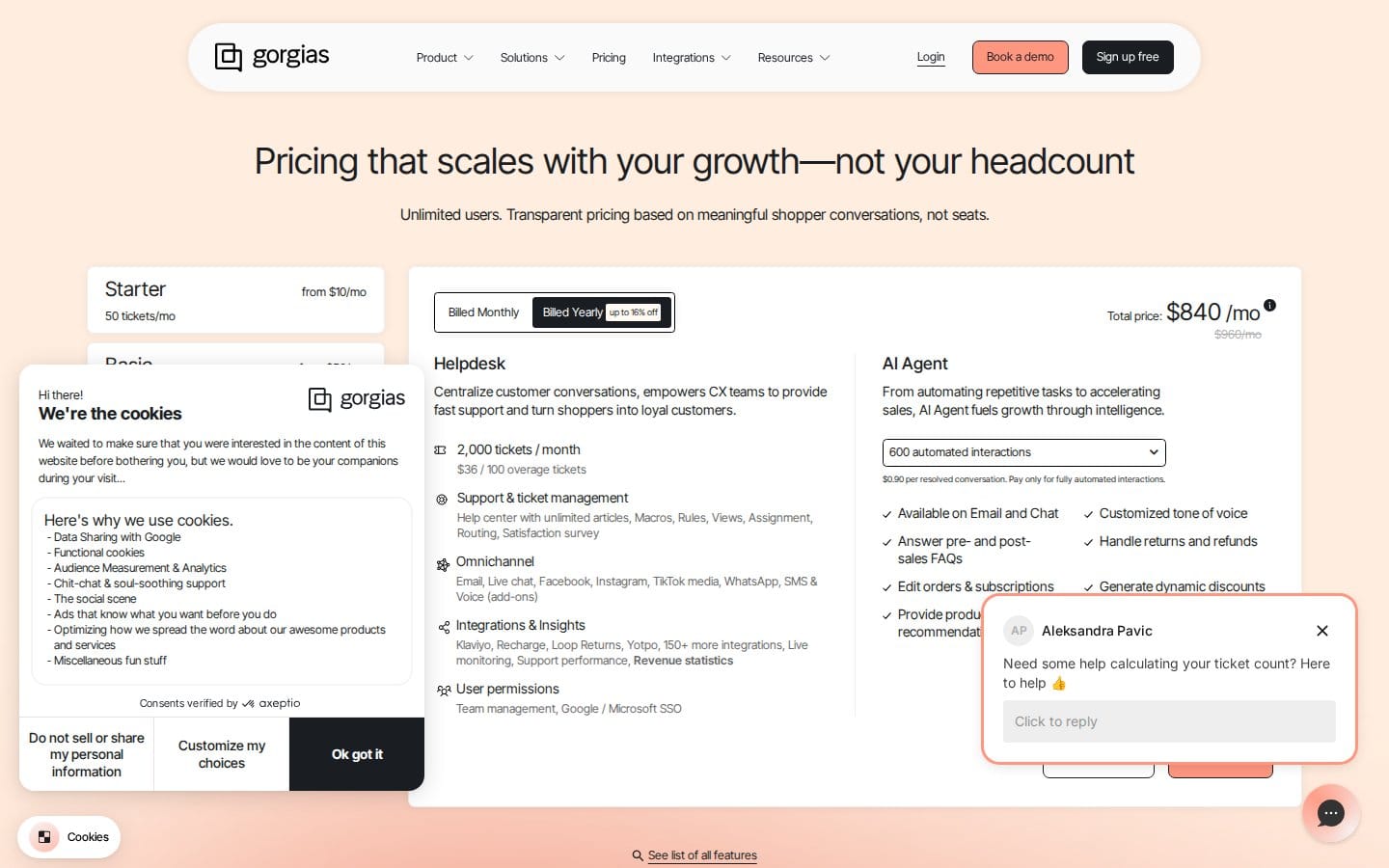
Gorgias is a helpdesk built specifically for e-commerce — not retrofitted from a general SaaS background, but designed from the ground up for Shopify-native brands. It pulls every customer conversation (email, chat, SMS, WhatsApp, Instagram DMs, Facebook messages) into one inbox and lets your agents take action on orders without leaving the ticket.
Strengths
- One omnichannel inbox covering email, chat, SMS, WhatsApp, Instagram, and Facebook — fashion brands with active social followings particularly benefit here.
- Native Shopify integration lets agents cancel orders, apply discounts, edit orders, and process refunds directly inside the ticket. No tab-switching.
- Revenue attribution reporting shows which support interactions actually convert — useful for justifying headcount to sceptical founders.
Best fit
Best for Shopify-first fashion brands with active social channels and a meaningful volume of pre- and post-purchase queries. Note that the AI Agent is billed separately per resolved conversation, on top of the base helpdesk plan. If you're connecting Gorgias to Amazon, our step-by-step setup guide walks through the integration.
Zendesk
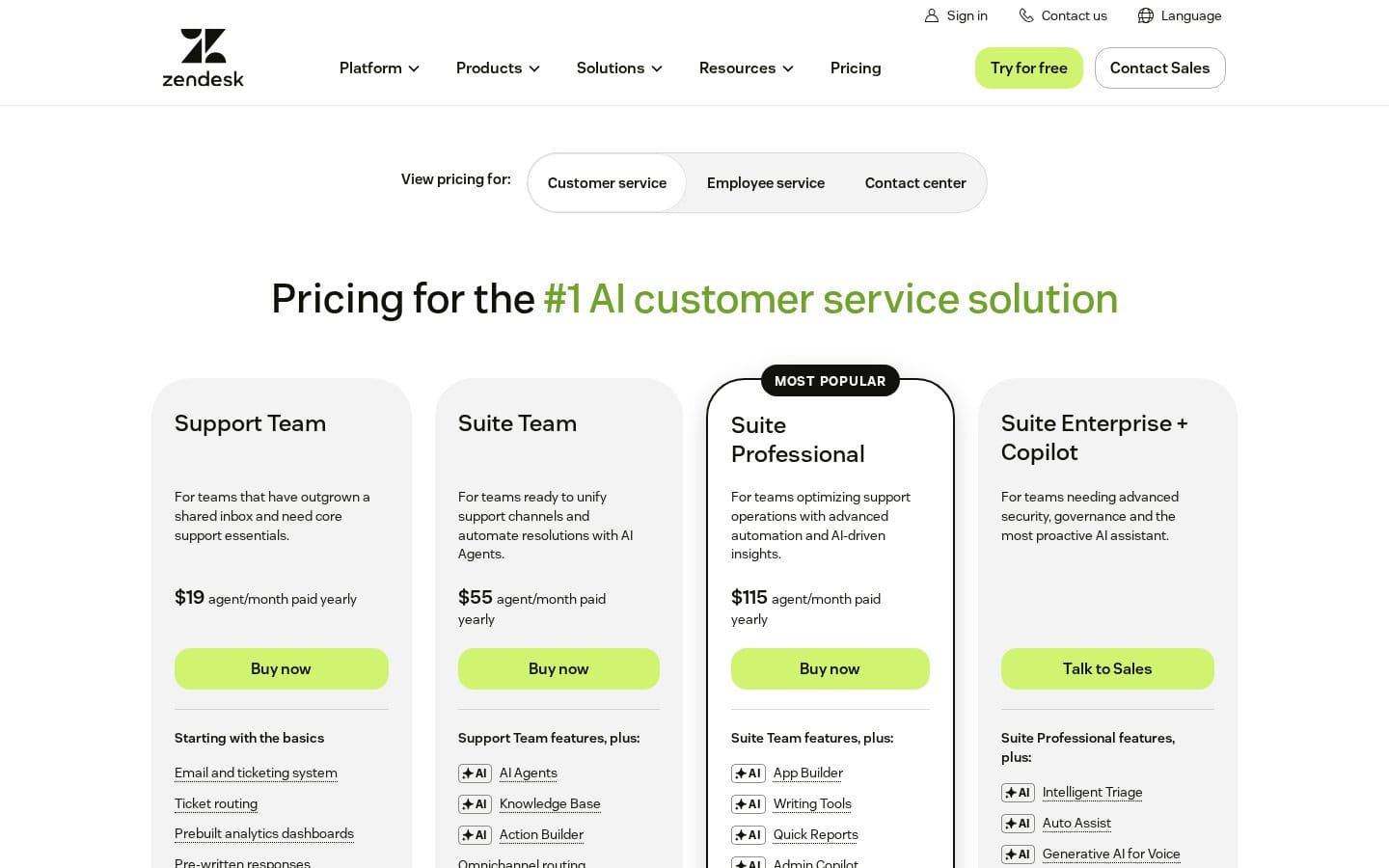
Zendesk is the more established enterprise-grade option. It handles omnichannel ticketing across email, chat, phone, social, and messaging apps, with a self-service knowledge base and workforce management tools built in. For fashion brands with a dedicated support team of five or more agents, the added structure is worth it.
Strengths
- Omnichannel ticketing across email, chat, phone, social, and messaging apps — solid for brands running both DTC and B2B wholesale support from the same team.
- Self-service knowledge base reduces inbound ticket volume, useful if your returns and sizing questions are repetitive and documentable.
- AI-powered automation including AI Agents, Copilot, and generative replies — more mature AI tooling than most alternatives at this price point.
Best fit
Better suited to fashion brands with larger, structured support teams handling high ticket volumes. Advanced AI features and certain add-ons are locked behind higher tiers or incur additional costs, so the entry price undersells the true cost for teams that need the full feature set.
Email marketing
Email is still the highest-ROI marketing channel for fashion brands — but only if you're sending the right message to the right segment at the right moment. Abandoned cart sequences, post-purchase flows, seasonal campaigns, VIP tier communications: these all need a platform that understands e-commerce behaviour, not just open rates.
Omnisend
Omnisend is an all-in-one marketing platform built for e-commerce, covering email, SMS, and web push notifications. The automation workflows map directly to the fashion purchase cycle — welcome sequences, abandoned cart, browse abandonment, and post-purchase flows are all templates, not builds-from-scratch.
Strengths
- Automation workflows (abandoned cart, browse abandonment, welcome series) are ready to deploy without custom development.
- Audience segmentation based on shopping behaviour — segment by category purchased, average order value, or return frequency, all relevant cuts for fashion.
- Free tier available (up to 250 contacts and 500 emails/month), which is a genuine starting point for early-stage brands before list size makes paid plans necessary.
Best fit
Strong fit for fashion brands on Shopify, BigCommerce, or WooCommerce that want email, SMS, and push in one tool. All outgoing emails on the free plan carry Omnisend branding, so it's worth upgrading before your list grows large enough for that to matter to customers.
ActiveCampaign
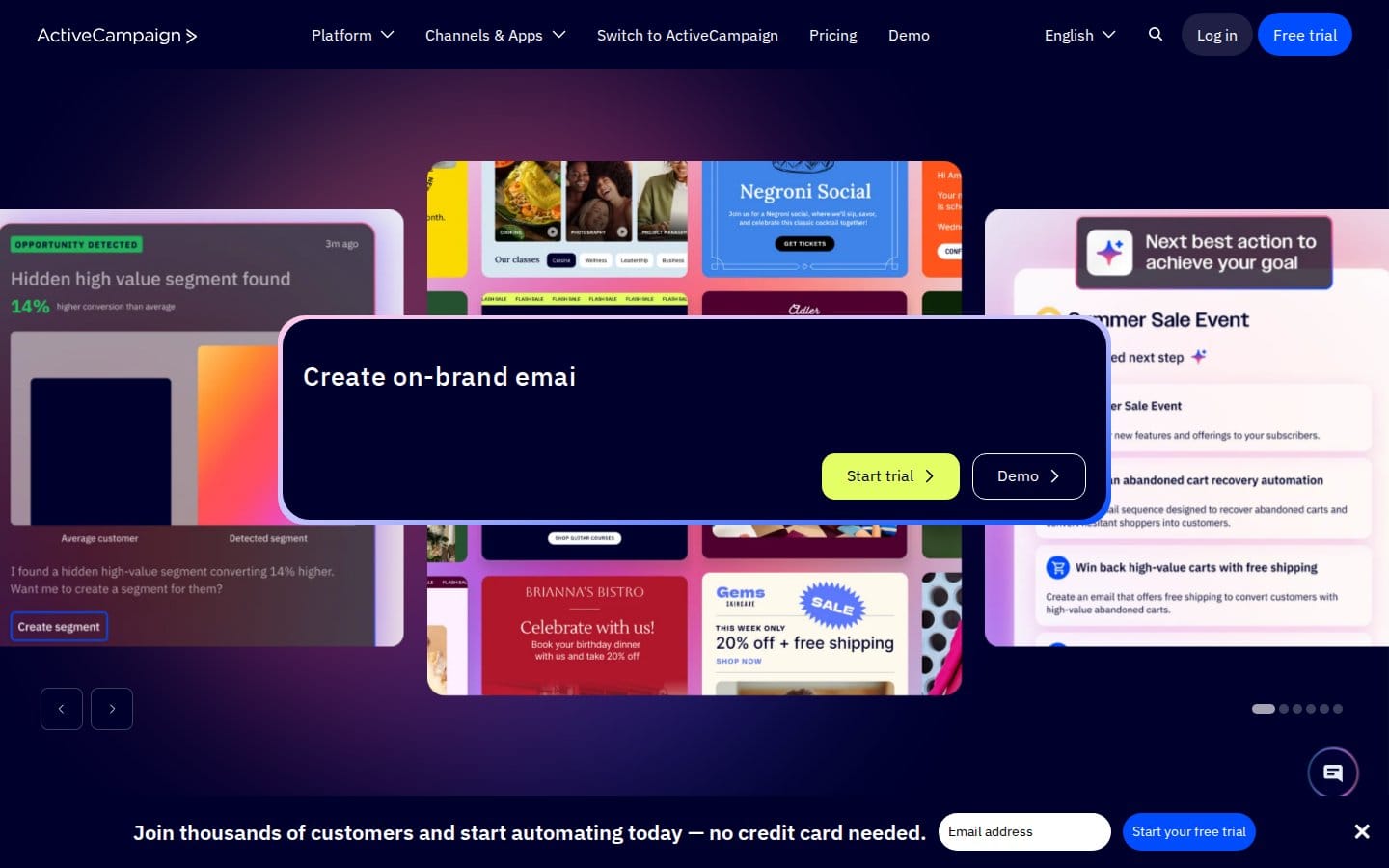
ActiveCampaign goes further than email. It combines marketing automation, CRM, sales pipelines, and landing pages in one platform — worth considering for fashion brands that manage wholesale or B2B relationships alongside DTC.
Strengths
- Marketing automation with CRM and sales automation in one tool — useful for brands managing both retail customers and wholesale buyers.
- AI and predictive sending on higher plans, which can improve deliverability and open rates without manual A/B testing.
- Integrates with Shopify, Salesforce, Google Ads, and Meta — broad enough to sit at the centre of a larger marketing stack.
Best fit
Better suited to fashion brands with complex multi-segment marketing needs or a wholesale arm. The Starter plan restricts automations to 5 actions per workflow with no branching or conditional logic, no landing pages, no AI-generated content, and supports only 1 user seat — it feels restrictive until you're on a higher plan.
Loyalty and rewards
Fashion is a repeat-purchase category. A customer who buys twice is worth substantially more than one who buys once. Loyalty programmes work here because fashion customers have genuine affinity for brands they like. The tools in this category build structured programmes — points, VIP tiers, referrals — that give customers a reason to come back and to tell their friends.
Smile.io
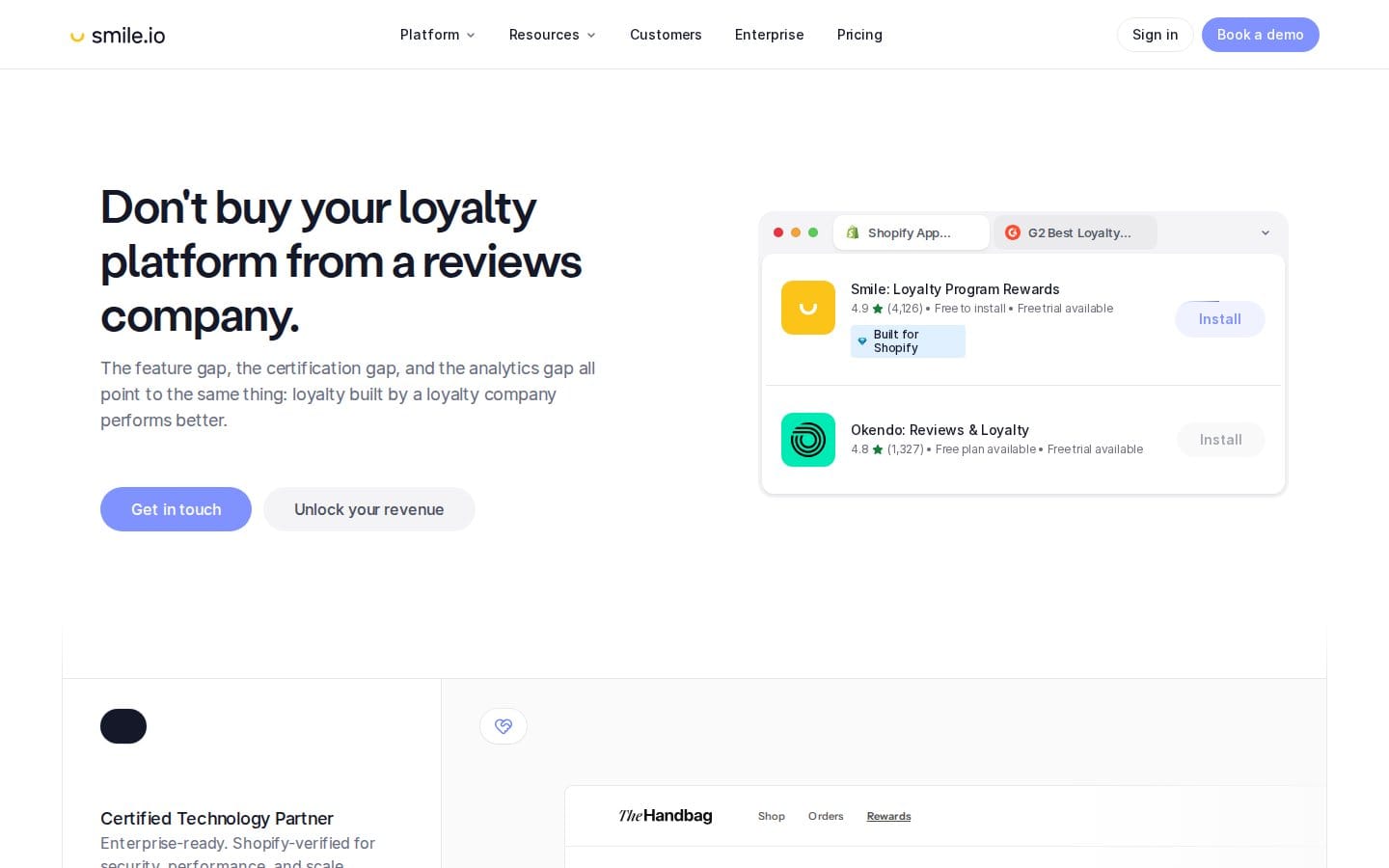
Smile.io is one of the most widely deployed loyalty platforms in the Shopify ecosystem. It offers points programmes, VIP tiers, and referral programmes, with embedded loyalty blocks that sit natively in your storefront without custom development.
Strengths
- Points programme, VIP tiers, and referral programme all available — covers the main loyalty mechanics fashion brands actually use.
- Embedded loyalty blocks and checkout extensions keep the programme visible in the purchase flow, not buried in a separate account page.
- Integrates directly with Gorgias, Omnisend, Klaviyo, and Recharge — loyalty data flows into support and marketing tools without manual exports.
Best fit
Good fit for Shopify brands wanting a straightforward, well-integrated loyalty layer. API access is not available below the Plus plan, so brands needing custom integrations or headless commerce builds should check plan requirements before committing.
Yotpo
Yotpo does more than loyalty. It's a combined platform covering user-generated content (reviews, photos, videos), loyalty and referral programmes, and SMS and email marketing. For fashion brands, the UGC angle is particularly valuable — real customer photos on product pages convert better than studio shots.
Strengths
- Review collection with photos and videos via email, SMS, and AI prompts — fashion-specific UGC that populates product pages with social proof.
- Loyalty and referral programmes including points-for-purchase, VIP tiers, and custom rewards, managed from the same platform as reviews.
- AI-powered review summaries and sentiment analysis give merchandising teams a fast read on what's working across the product range.
Best fit
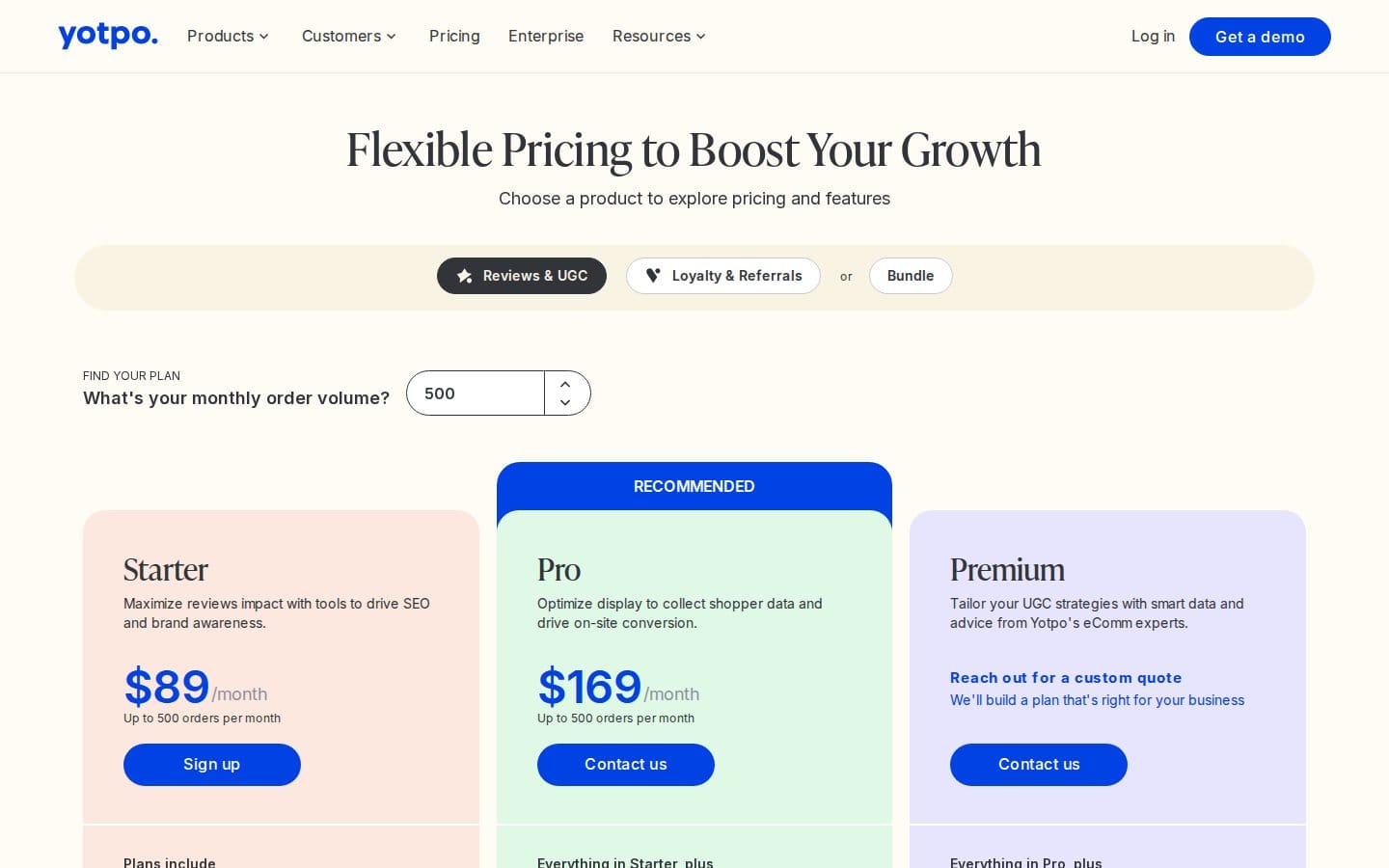
Best for fashion brands that want reviews, loyalty, and SMS consolidated in one platform. The Starter tier for Reviews & UGC is limited to 500 orders per month, so faster-growing brands will hit custom pricing sooner than expected.
Returns management
Returns are the operational reality of fashion e-commerce. A 20–30% return rate is entirely normal for apparel — and how you handle them determines whether a customer comes back or churns permanently. Exchange-first return flows, where a customer swaps a size rather than requesting a refund, are the single most effective way to retain revenue on a return. The tools here make that the path of least resistance.

AfterShip
AfterShip is primarily a tracking and post-purchase experience platform. It covers shipment tracking across a large carrier network, branded tracking pages, and automated delivery notifications, with returns management as part of the suite.
Strengths
- Shipment tracking across a large carrier network, with branded tracking pages that include personalised product recommendations — a revenue opportunity on what's usually a dead-end page.
- Exchange-first returns management keeps revenue in the business rather than triggering refunds by default.
- Automated email and SMS delivery notifications cut "where is my order" tickets — directly reducing support volume for brands using Gorgias or Zendesk alongside it.
Best fit
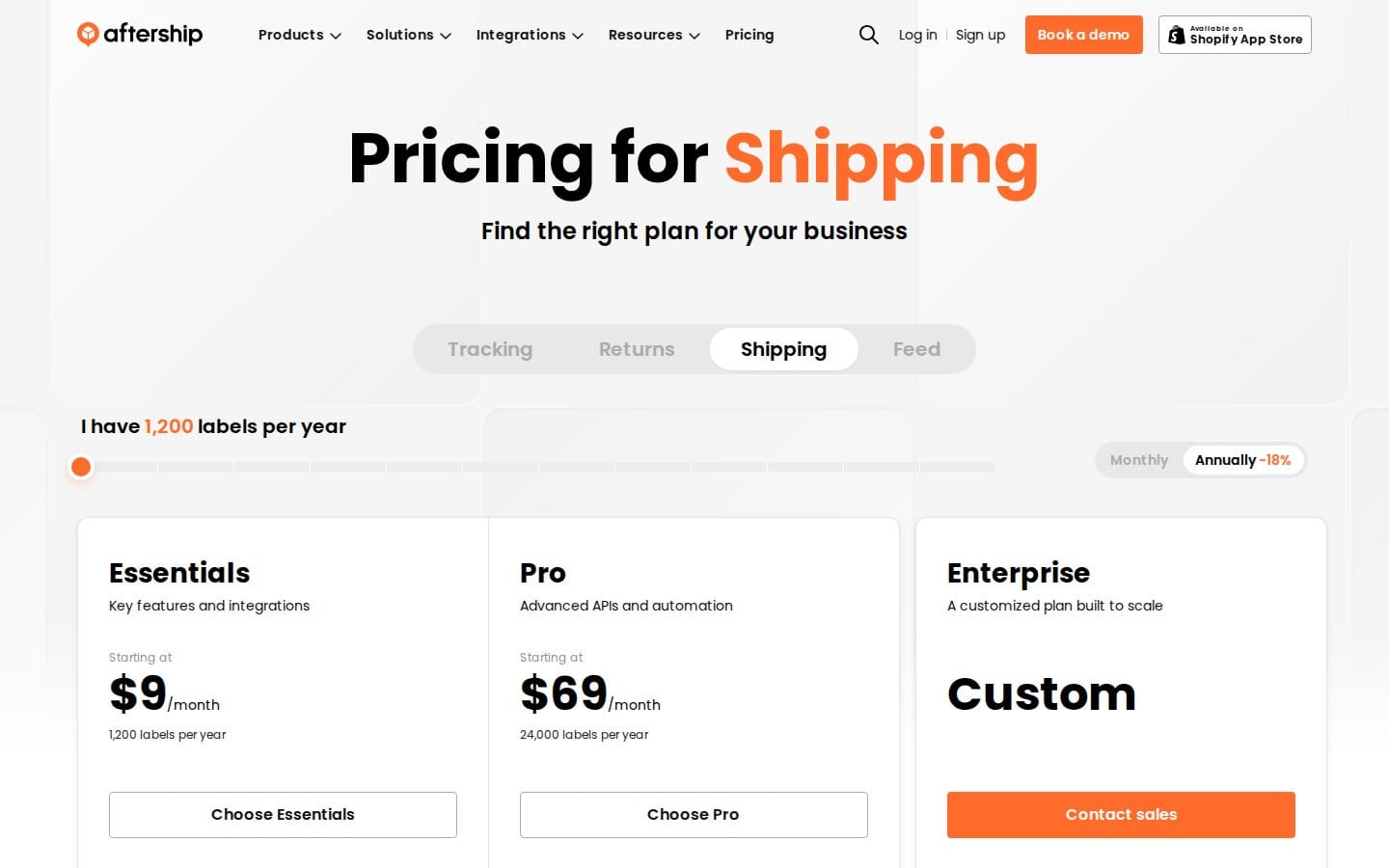
Good fit for brands that want tracking and returns in one tool with a generous free starting point. The free plan for AfterShip Shipping is limited to 10 labels per month, so it's a starting point rather than a long-term free option for any brand at volume.
Loop Returns
Loop Returns is the more specialised option — built specifically for Shopify brands that want to aggressively convert returns into exchanges. Its "Shop Now" feature lets a customer browse the full catalogue during the return flow and choose a replacement, not just the same item in a different size.
Strengths
- Exchange-first return flow with Shop Now and Instant Exchanges — customers can swap for any product in the catalogue, not just the returned item.
- Automated return policies and workflows with fraud detection built in — important for fashion brands where serial returners are a real operational problem.
- Self-service returns portal reduces manual processing time, which compounds quickly when return volumes are high.
Best fit
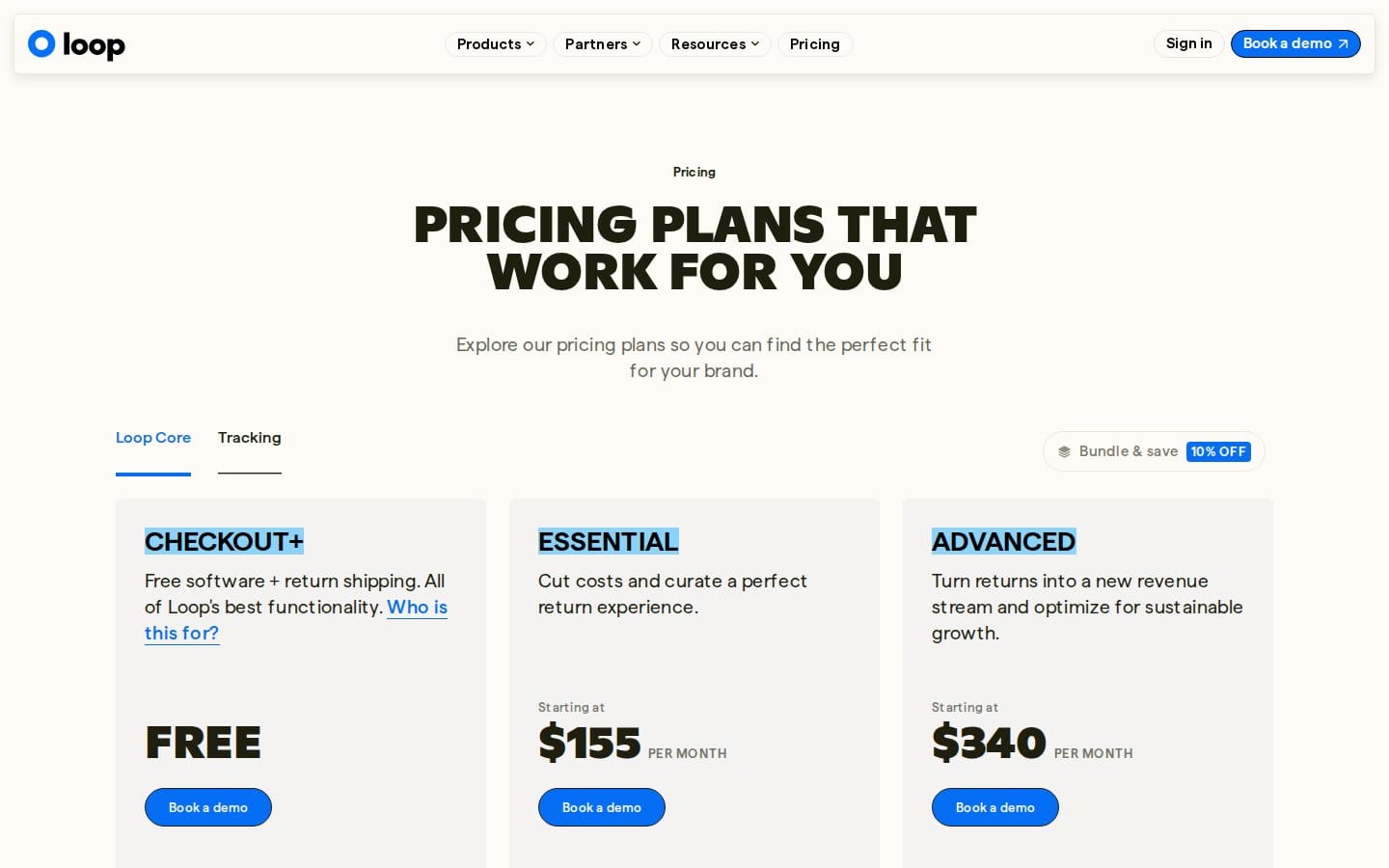
Best for Shopify brands doing meaningful return volumes who want to retain revenue through exchanges rather than process refunds. Order Tracking pricing is based on plan and monthly shipment volume, with a flat fee covering estimated shipments and additional per-shipment fees above that threshold — model your volume before committing.
Subscriptions
Not every fashion brand needs a subscription model. But for brands selling replenishable items — basics, socks, underwear, activewear — or curated styling boxes, recurring revenue changes how you plan cashflow and forecast stock. This category handles the mechanics: billing, customer self-service portals, churn prevention, and failed payment recovery.
Recharge
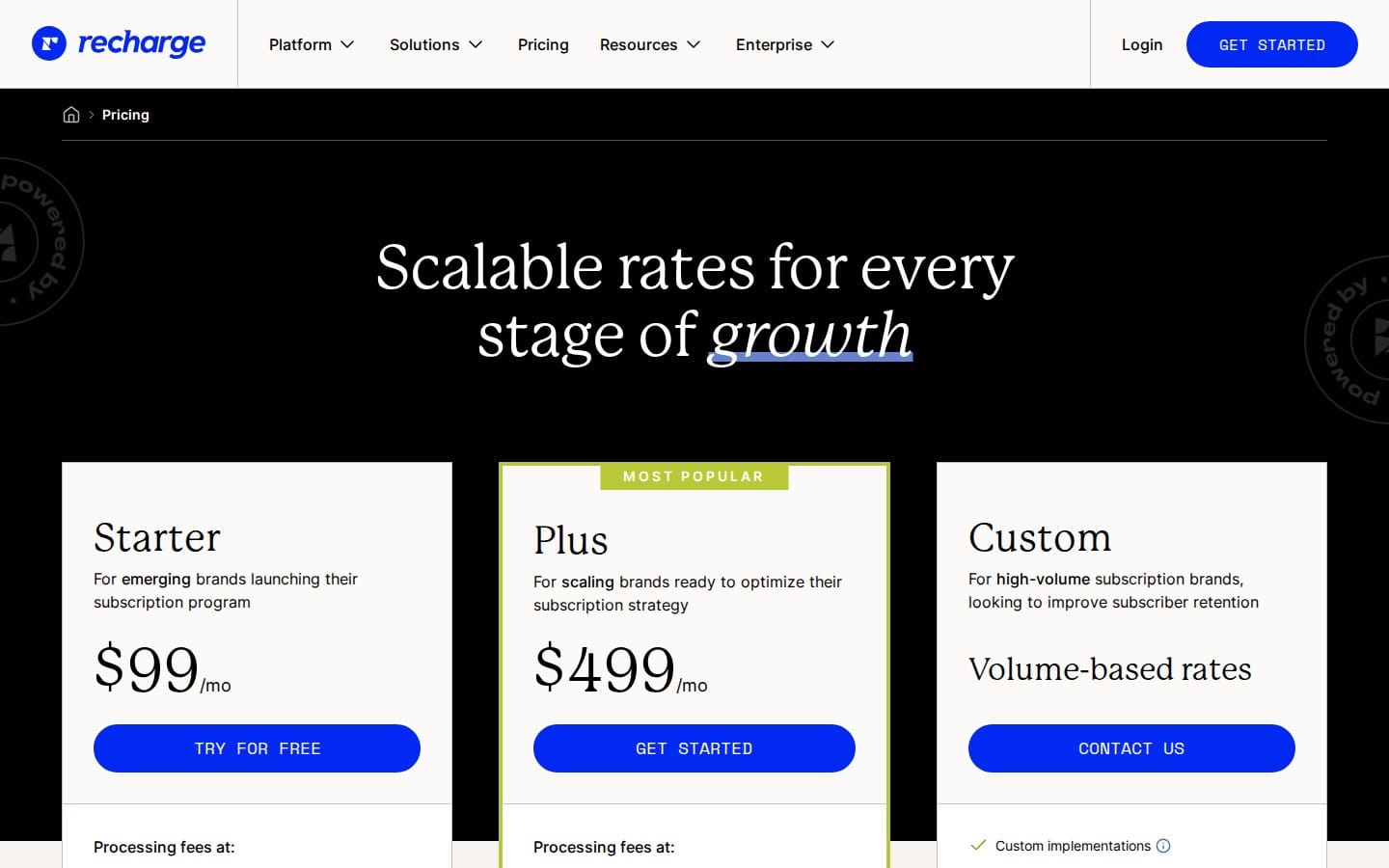
Recharge is the most widely deployed subscription platform in the Shopify ecosystem, covering everything from simple subscribe-and-save programmes to complex bundle subscriptions with customer-managed portals.
Strengths
- Customisable customer portal with self-service options (skip, reschedule, swap products, update payment) — reduces churn from subscribers who'd otherwise cancel rather than manage their subscription.
- Cancellation prevention and win-back campaigns built into the platform, not bolted on via third-party integrations.
- Failed payment recovery and subscription analytics — the reporting shows you where in the subscription lifecycle you're losing customers.
Best fit
Strong fit for Shopify and BigCommerce brands launching or scaling a subscription programme. All bundle functionality requires the Plus plan or higher, so if bundling is central to your subscription model, factor that into your plan selection from the start.
Ordergroove
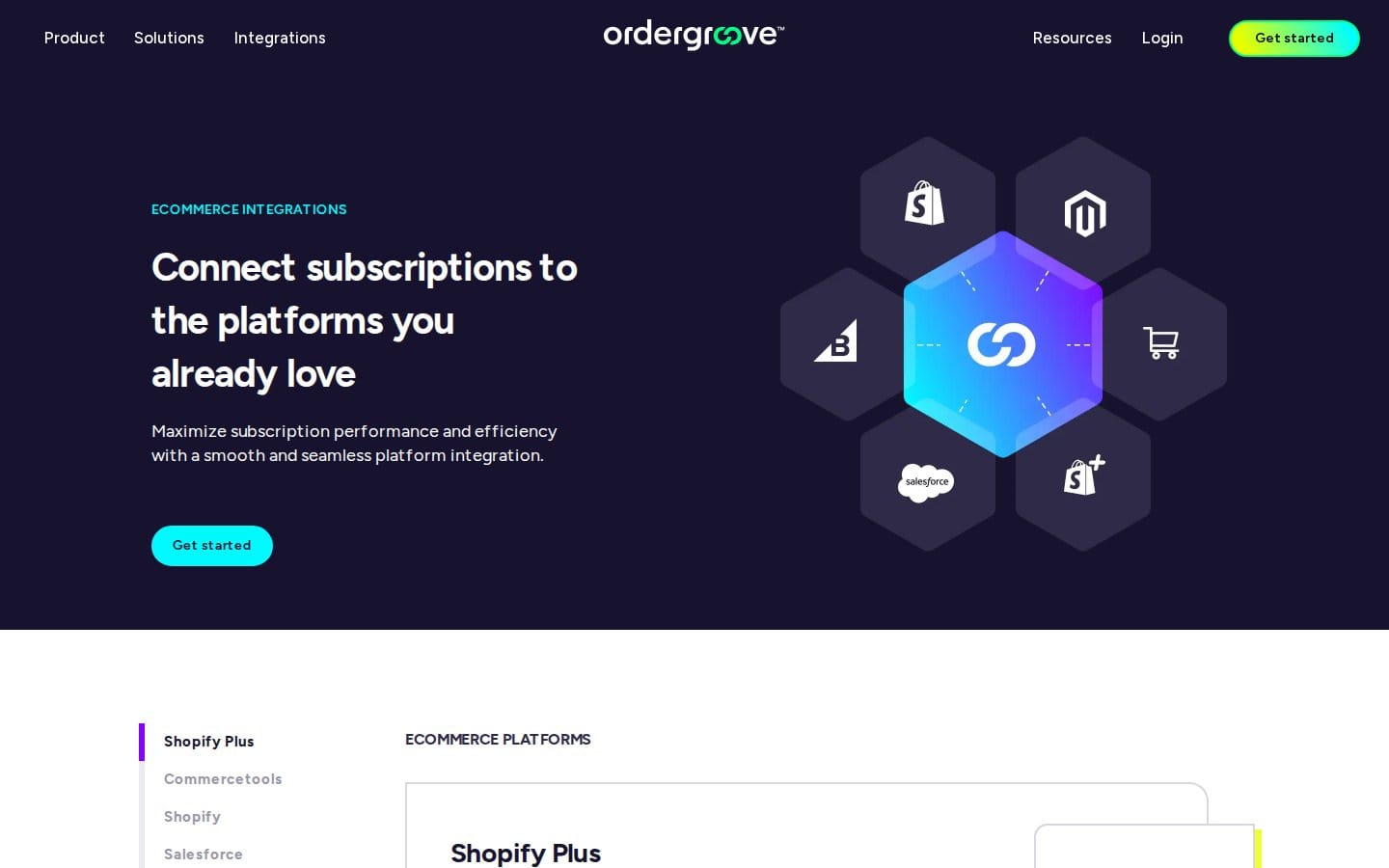
Ordergroove sits further up-market. It supports Shopify, Magento, Salesforce Commerce Cloud, BigCommerce, and Commercetools — which makes it viable for fashion brands on more complex or headless commerce setups where Recharge's Shopify-centricity becomes a constraint.
Strengths
- Subscription enrolment and management across multiple platforms including Magento and Salesforce Commerce Cloud — not locked to Shopify.
- Flexible incentives and promotions for subscription sign-up and retention, configurable without code on standard plans.
- Predictive analytics and involuntary churn prevention (failed payment recovery) built into the core platform.
Best fit
Better suited to mid-market or enterprise fashion brands running non-Shopify or multi-platform commerce setups. Advanced configuration options are available through Ordergroove Support rather than self-serve, so factor in implementation time.
Analytics
Selling on multiple channels generates a lot of data. The problem isn't a shortage of numbers — it's understanding what's actually happening with customers on your website and why they're converting or dropping off. This category covers behavioural analytics and product analytics: the tools that show you what users are doing, not just what your sales dashboard says happened.
Hotjar
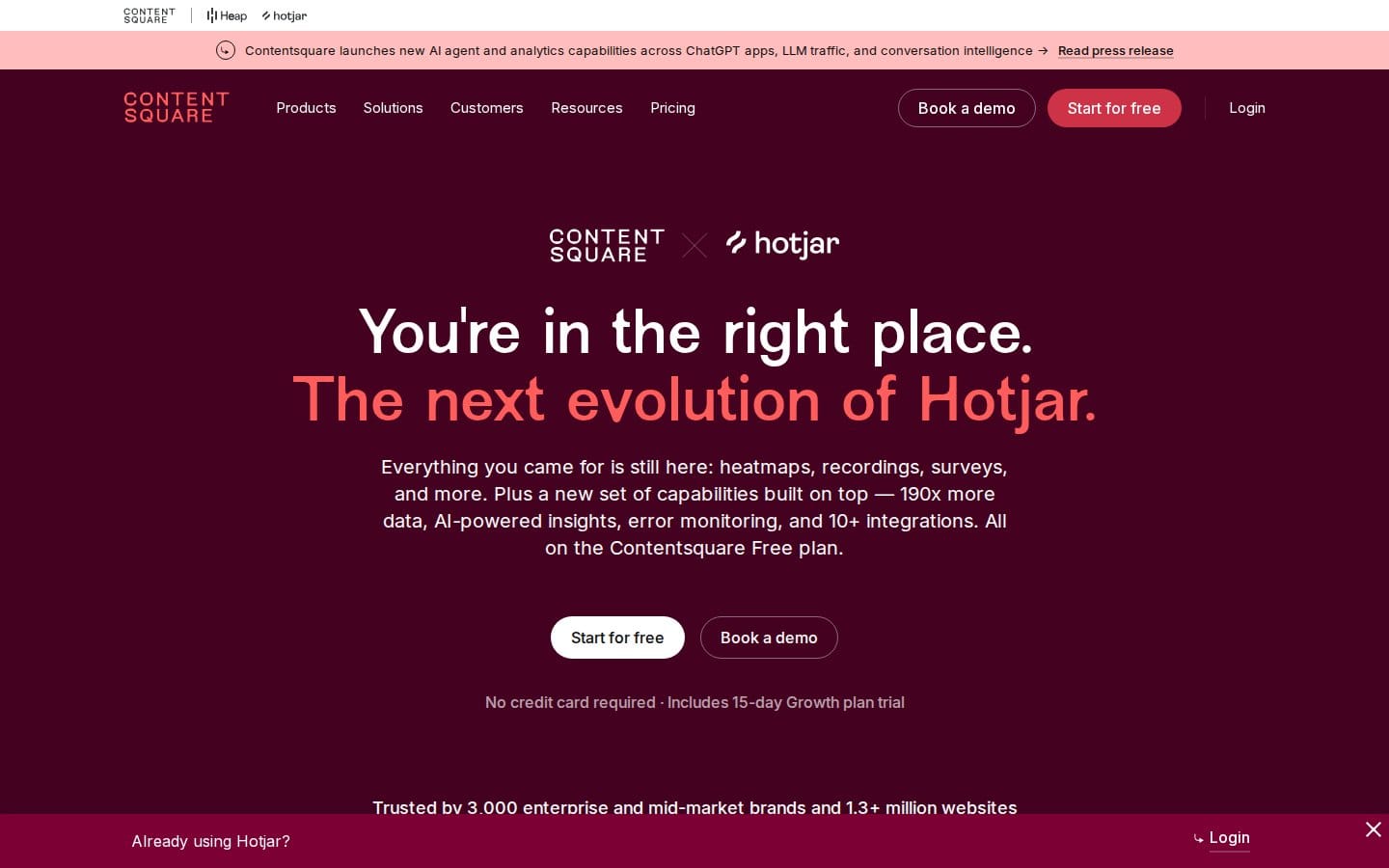
Hotjar is the go-to for visual behavioural analytics — heatmaps, session replays, and on-site surveys that show you exactly where customers click, scroll, and abandon. For fashion brands, it's particularly useful for spotting friction on product pages. Are customers scrolling past the size guide? Abandoning at colour selection? Hotjar shows you, without custom event tracking.
Strengths
- Heatmaps and session replay in a single tool — you can watch anonymised sessions of customers on your product pages and identify drop-off points without building custom event tracking.
- On-site surveys and feedback tools let you ask customers directly why they didn't convert, which is faster than inferring from analytics alone.
- Free tier available with genuine functionality — useful for smaller fashion brands who want to start optimising before committing to a paid analytics stack.
Best fit
Best for fashion brands wanting to understand why visitors aren't converting on product and category pages. Note that Product Analytics from Heap is on the roadmap and will roll out over time — plan for what's live today.
Mixpanel
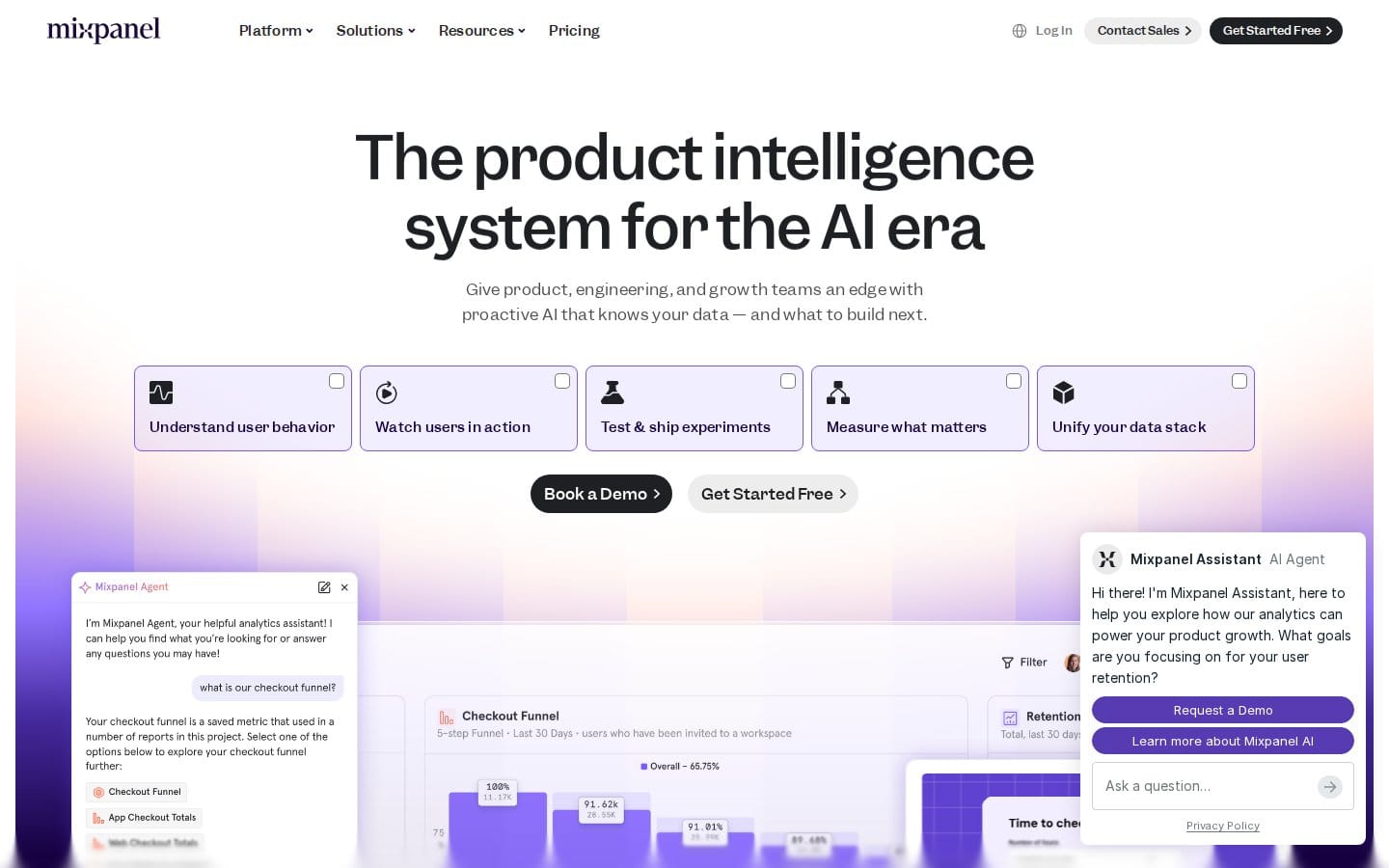
Mixpanel goes deeper than behavioural heatmaps into event tracking, funnel analysis, cohort analysis, and experimentation. For fashion brands with a large enough customer base to run statistically meaningful experiments, it's the right tool for understanding retention and conversion at a granular level.
Strengths
- Event tracking and funnel analysis that maps the customer journey from first visit to repeat purchase — useful for identifying where in the path customers are dropping off.
- Cohort analysis lets you compare how different customer segments (by acquisition channel, first purchase category, or geography) behave over time.
- Free tier available — limited to 5 saved reports and 10,000 monthly session replays, but enough for early-stage teams validating whether the platform suits their needs.
Best fit
Better suited to fashion brands with a data-focused team and enough monthly traffic to make cohort analysis meaningful. Below roughly 10,000 monthly active users, the insights won't be statistically reliable enough to act on confidently.
The stack at a glance
| Category | Tool | Free tier | Best integration |
|---|---|---|---|
| Inventory, Compliance & Accounting | Ceendesis | No | Shopify, Amazon, Xero, QuickBooks |
| Customer Support | Gorgias | No | Shopify, Klaviyo, AfterShip |
| Customer Support | Zendesk | No | Shopify, Salesforce, Slack |
| Email Marketing | Omnisend | Yes | Shopify, BigCommerce, Google Ads |
| Email Marketing | ActiveCampaign | No | Shopify, Salesforce, Meta |
| Loyalty & Rewards | Smile.io | Yes | Shopify, Gorgias, Omnisend |
| Loyalty & Rewards | Yotpo | Yes | Shopify, Klaviyo, Google |
| Returns Management | AfterShip | Yes | Shopify, Klaviyo, Gorgias |
| Returns Management | Loop Returns | Yes | Shopify, Gorgias, Klaviyo |
| Subscriptions | Recharge | No | Shopify, Klaviyo, Gorgias |
| Subscriptions | Ordergroove | No | Shopify, Salesforce CC, Klaviyo |
| Analytics | Hotjar | Yes | Google Analytics, Segment |
| Analytics | Mixpanel | Yes | Segment, BigQuery, HubSpot |
Frequently asked questions
What is an omnichannel tech stack?
An omnichannel tech stack is a set of integrated software systems that work together to deliver a consistent customer experience across every sales channel — your website, marketplaces, social commerce, physical retail, and email. The key word is "integrated": tools that don't share data in real time aren't really omnichannel, they're just multi-channel with extra manual steps. A well-built stack means a customer can start a conversation on Instagram, complete a purchase on Shopify, and return an item via a self-service portal — all without your team manually reconciling anything between systems.
How do fashion brands manage inventory across multiple channels?
Fashion brands typically use a centralised inventory management system (IMS) or order management system (OMS) that syncs stock levels across channels in real time. Without it, you're at constant risk of overselling on one channel while sitting on dead stock on another — expensive in both refunds and lost margin. More advanced setups use the same inventory layer to enable services like Buy Online, Pick Up In-Store (BOPIS), where real-time availability is a hard requirement. For brands selling on Amazon and Shopify simultaneously, our guide on syncing Amazon FBA inventory covers one practical approach to keeping visibility centralised.
What software is essential for a modern apparel brand?
At a minimum: an e-commerce platform, an inventory or order management system, a customer support tool, and an email marketing platform. Those four categories deliver the clearest ROI earliest. Loyalty, returns management, subscriptions, and advanced analytics are genuine value-adds, but they're optimisation plays — you need a functioning operation before you can optimise it. For fashion brands selling into EU markets, textile EPR compliance (Refashion, DPP, REACH) is also non-negotiable now, not optional infrastructure. The e-commerce operations stack for EU expansion covers the compliance layer in detail.
How does an OMS help with omnichannel retail?
An OMS centralises order processing across all your sales channels, manages inventory allocation in real time, and handles complex fulfilment logic — routing an order to the nearest warehouse, triggering a ship-from-store flow, managing a BOPIS pickup. Without one, each channel processes orders independently. Inventory counts diverge, fulfilment errors multiply, and customer-facing promises (estimated delivery dates, stock availability) become unreliable. For larger fashion brands also managing wholesale accounts alongside DTC, an OMS is what stops those two businesses from cannibalising each other's inventory. The agile operations stack for fast fashion covers how this fits into a higher-velocity operation.
What to prioritise and when
Here's the honest summary. Customer support and email marketing are essential from the moment you have customers — they pay for themselves quickly, and the cost of not having them grows fast. Returns management becomes essential as soon as your return volume makes manual processing painful, which for fashion brands typically happens earlier than you'd expect. Loyalty and analytics are strategic adds: high value, but only once you have enough customers and data to make them meaningful. Subscriptions are only relevant if your product category actually suits recurring purchase — don't force a subscription mechanic onto a product customers buy once a year. And inventory and compliance belong at the foundation, because nothing else in this stack works properly if you don't know what you have and where it is.
For brands expanding into the EU, the compliance layer isn't optional. Check our France CITEO reporting guide and the broader circular economy tech stack for what's required and what's just good practice.
Screenshots are from each tool's public pricing or features page, captured June 2026. We are not affiliated with any third-party tool listed unless explicitly noted.